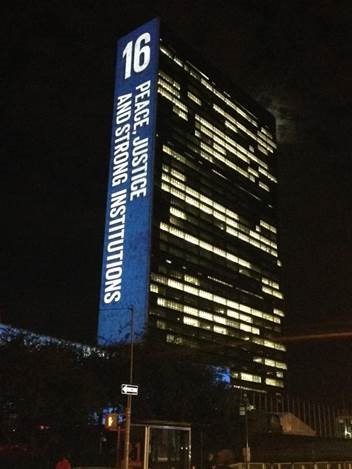
A version of this post is on Huffington Post and International Alert‘s website.
In the UK, a parliamentary debate can be initiated by popular petition. On 13th June, Parliament will debate the proposition that the government’s approach to foreign aid is flawed. This is based on a petition, initiated by the Mail on Sunday newspaper and signed by over 230,000 people, as follows:
Despite spending cuts at home the Government is committed to hand over 0.7% of national income in overseas aid, regardless of need. The Mail on Sunday believes voters do not want this and instead, we should provide money only for truly deserving causes, on a case-by-case basis. A bill passed in 2015 required the Government to spend a fixed 0.7% of gross national income on foreign aid. UK handouts will rise from current £12bn to £16bn by 2020. This is by far the highest rate of any G20 nation and is leading to huge waste and corruption. We believe this is the wrong approach because it fuels waste by focussing on targets, not outcomes. Foreign aid should provide money for the job, not jobs for the money.
Essentially the petition reiterates the perfectly rational idea that creating a budget before agreeing a task is back-to-front, and risks creating perverse incentives due to the need to spend a certain amount of money annually; whereas building a budget based on a set of agreed goals and tasks would be a better approach. On top of that, the petition implies this is unfair on UK taxpayers because most other countries contribute less money and/or less as a proportion of national income.
One can question whether the fact 230,000 people – less than four for every 100,000 people – have signed up really represents significant support for the point being made. After all, more than four times as many people signed a recent petition to reinstate a controversial TV presenter. Nevertheless, it is not difficult to agree with both the argument and the implied sentiment of the petition as they are articulated, so no wonder people have signed it. I’ve worked for overseas charities since 1985, and I completely respect the point of view of those who question aid. In fact, I’d go further and say that I welcome the attention this petition and the parliamentary debate brings. The role of civil society and especially the media is surely to cast a sceptical eye on all government policy, and why should overseas aid be exempt?
0.7%, need and allocation
It is right to question whether the 0.7% target undermines effective policies and actions. After all, it is a more or less arbitrary figure based on a calculation made decades ago of the assumed “investment gap” in poor countries, reckoned as a percentage of national income in wealthy donor countries. It was based on the idea that wealthy countries should transfer the investment funds for a period of years until the economies were more equalised. Not only have the data changed hugely in the intervening years, but the simplistic notion of an “investment gap” is no longer thought useful, if it ever was.
But by its rhetorical use of the expressions hand over, regardless of need, and truly deserving causes on a case by case basis, the petition does its own argument a disservice. It assumes the government simply ‘hands over’ the money, but in fact, funds are programmed for specific purposes. It also assumes that a wholesale commitment to 0.7% (£12 bn this year) removes the link between the volume of aid and the size of the need.
Would that it were so. If there are roughly 700 million people living below the poverty line today, as the World Bank estimates, the UK’s budget works out at £17 per person. And that only includes those living on less than $1.9 per day – hardly a king’s ransom. So without getting into the complex economic jargon which is used to explain aid flows, and accepting that the UK does not and should not try to reach every poor person on the planet, it is quite easy to see that 0.7% is completely inadequate when set against the level of need.
As for the idea that aid should be targeted towards ‘truly deserving causes on a case by case basis’, this is quite right. Fortunately, the UK Aid strategy clearly sets out four causes towards which aid is directed:
• Strengthening global peace, security and governance.
• Strengthen resilience and response to crises.
• Promoting global prosperity.
• Tackling extreme poverty and helping the world’s most vulnerable.
As sceptical as one may be about aid, it would be hard to argue that these are not all truly deserving causes. Not only that, but they benefit the UK too: the first three quite directly, and the fourth indirectly.
And the petition is also right that even within these overall categories, allocations should be made on a case by case basis. I have worked in the aid sector since 1985, and although no donor organisation or NGO is perfect, I can attest that UK aid money is already allocated based on an assessment of whether or not it will make a specific difference in respect of specific needs and contexts. Even when the funds are provided to other organisations – UN agencies, NGOs, etc. – they are required to spend them (and report) based on an assessment of whether they make a difference. It is true that not all aid programmes work as well as intended, but that’s another story which I will come to in a moment. They certainly are designed to do so, and on a case by case basis.
Disproportionality and Aid effectiveness
On the question of proportionality I think the petition has a point: why should we spend 0.7% if other rich nations don’t? The petition is right to draw attention to the risks of a budget-driven approach. Its conclusion is that the debate should be about the 0.7% commitment. But the 0.7% commitment is already enshrined in law, and there is no parliamentary time available to overturn the law. This would take many months of valuable parliamentary time, and would be unlikely to succeed anyway, given the views of a majority of MPs including party leaders and their whips. I therefore suggest a different conclusion to the petition’s concerns, and a different debate on 13th June.
On the question of disproportionality: because we have already enacted the legislation and are unlikely to change it, I’d suggest that the debate should be about how to encourage other wealthy nations to match our commitment. After all, arbitrary spending levels like the 0.7% figure only really make sense as a way to prevent free riders – as with NATO members’ commitment to spend 2% on their military capacity.
But most importantly I would suggest the debate should focus on be how to ensure that UK aid is spent most effectively in pursuit of the four goals listed above, so that taxpayers can have confidence that their money is well spent. Because none of the four aid goals will be easy to achieve. If they were, we would have achieved them long ago. And all public policy is contestable – that’s why we have a parliament and a proactive civil society and media. One has only to look at the UK’s education, justice, health or energy sectors to see that.
Nor do any “policy solutions” seem to last long. A decade ago, Finland’s education sector was the envy of the world, and Whitehall was examining Finnish policies for clues as to what we should do here. Now, Finland – with the same policies in place – has slid down the international education league tables and is looking for new solutions.
If international aid policy is not unique in being imperfect, it is perhaps unique in being multi-dimensional, operating as it does in diverse and changing local contexts, and covering a wide range of needs and sectors. This means all the more need for a healthy and regular debate about what works best. My suggestion is therefore that any parliamentary debate about the aid budget and aid policies should focus on how to ensure that our aid is spent as effectively as possible, and how parliamentarians can hold the government and its partners to account for how well they contributes to the goals which have been set.
Don’t forget how crucial the economy is to peace in Syria
This blog, written with Julia Karlysheva, was originally published in The Guardian on 15 March 2016, and is also on International Alert’s website.
Economy and peace are intimately linked. But the economy can also play a role in conflict, and competition over resources is at the heart of most of the conflicts we see today.
Syria is no exception. The erosion of livelihoods by prolonged drought, and a history of excluding certain groups, helped trigger the conflict, which is now in its sixth year. With more than 4.5 million Syrians living as refugees in neighbouring countries and unemployment in Syria at up to 90%, the need to generate livelihood opportunities for both refugees and people inside Syria is critical, as highlighted at February’s donor conference in London.
Those promoting economic development in fragile and conflict-affected places – including businesses, governments, and local and international organisations – can and must ensure their projects make a contribution both to livelihoods and peace.
While official peace talks are ongoing, it is not too early to begin planning post-war reconstruction of the economy, which should aim to improve access to livelihoods and gradually build bridges between those who have been divided.
This will not end the civil war: to do this, an urgent political solution is required. But economic reconstruction could help de-escalate the conflict at a local level, and reduce the risk that peace would be undermined.
A strong economy could:
1) Reduce the risk that people will be recruited by armed groups by providing alternative income sources and giving young people, especially, a sense of purpose, dignity and hope;
A young man with a reliable income – especially if he has several mouths to feed – is less vulnerable to the blandishments of armed groups seeking recruits. The sense of purpose he gets from being economically engaged in society also means there is less chance he will be swayed by ideological arguments.
2) build bridges between divided communities by bringing people together around a common purpose and need, and gradually create a web of connections through trade. Communities connected by trade are less likely to go to war than those who are not;
3) Sow the seeds for a “peace-supporting” economy. This means ensuring that businesses and entrepreneurs understand the causes of conflict and are conscious of how their actions can exacerbate or help resolve tensions. For example, they could ensure they do not restrict employment or supply chain opportunities to one preferred social group. By spreading the peace dividend across social divisions, they can do much to promote peace.
Clearly, the pre-conflict economy had within it the seeds of the war now being fought and these included the structural exclusion of some groups and the preferential access to opportunity granted to others, both nationally and on a local scale. Recovery must be based on the need to spread opportunities and benefits more fairly, and reduce the tensions which exclusion and unfairness can cause, while at the same time taking care not to create a situation in which former elites become the new excluded, storing up the potential for future unrest.
4) Galvanise regional private sector leaders into shaping and delivering a peace-supporting economy now and in the long term. Many business people are also civil society leaders, highly respected and often powerful and well-connected. Their voices are critical in lowering tensions and bringing people together in dialogue, especially during the dangerous period after any peace agreement is made, when mistrust and the desire for revenge will remain at high levels.
Leadership will be key – and business people in Syria and the region will have an important role to play.
This was also published on International Alert‘s website
The UK government’s U-turn over changes in support to people with disabilities last week leaves a gap of over £4bn in fiscal plans for the current parliament. Some commentators have taken this opportunity to call for this to be plugged, or partly plugged, by reducing the overseas development aid (ODA) budget, which stands at about £12bn this year, and is set to rise annually in line with GDP growth.
I work for International Alert which receives some of these funds, which we use to help build peace in more than 25 countries and territories. Nevertheless, we have in the past questioned the need to fix the UK’s ODA budget at a somewhat arbitrary 0.7% of GDP, feeling that it would surely make more sense to base the budget on achieving particular policy goals, than on a rather arbitrary percentage whose origins are somewhat lost in the mists of time.
But now is not the time to raid the aid budget to balance the books. The terrorist attacks in Belgium and Turkey this week are a sharp reminder that we live in a world simultaneously connected and unsettled. Indeed, the two phenomena are related, both for good and for ill.
For good, because development progress (i.e. change) is by nature unsettling and is enabled by connections – travel, the exchange of knowledge and ideas, mutual support and learning, trade, etc.; and an unsettled status quo often creates opportunities for good changes (development) to happen.
For ill, because people’s ability to travel to other parts of the world and connect with others can be unsettling to the status quo and sometimes make life more risky for them and others; and an unsettled world drives some people to travel and create disruption elsewhere – whether intentionally or not.
The current ‘wave’ of refugees into Europe, linked as it is to war and international terrorism, is one obvious example of the latter. If one adds in the impacts of climate change – whose impacts will be felt by all nations, who therefore share an interest in doing something about it – it makes sense to recognise that we are living in an era when, perhaps more than ever before, it is possible to speak in terms of common or shared security (and common or shared insecurity), rather than only narrowly of national security.
So if the UK is – as a P5 member, historically a trading nation and the fifth largest national economy – a significant player in this unsettled and connected world, it makes sense to apply a portion of the government’s budget to reducing the risks the world faces in the next few years: the common or shared risks. If done in the right way, this has an impact not only on people’s wellbeing and security in the most obviously unsettled parts of the world, but on the wellbeing and security of UK citizens too.
So rather than call for the UK’s ODA to be reduced to plug the apparent fiscal hole in the budget approved by parliament this week, perhaps those who want to place the UK’s interests first should instead call for ODA to be used to help make the world a safer place – and a safer place for all, including British citizens. The UK’s aid strategy, released at the end of last year, already recognises this, with its headline focus on building peace and prosperity, reducing poverty, promoting resilience in the face of natural and political disasters, and responding to humanitarian crises when local resilience is insufficient.
While the UK alone is not responsible for fixing the world’s ills – and nor could it – £12bn per year or about 1.5% of government spending doesn’t seem too high a price set against the scale of the challenge, and certainly not if it helps keep people safe in fragile and conflict-prone countries and in the UK too.
As Cicero said, the safety of the people is the highest law. But safety is not just provided by people in uniform, it’s provided by friends, family and neighbours looking out for one another in prosperous and harmonious communities; by all people – especially young people – feeling they are part of that community with all the political, economic and social opportunities and duties which that entails.
These are some of the outcomes ODA helps achieve, by improving livelihoods, infrastructure and governance in conflict-prone and conflict-affected countries and regions. By thus contributing to stability far away in a connected and unsettled world, British ODA does have a domestic impact too.
Bread and Peace
Economic development and peace are both needed by the 1.4 billion people living in fragile, conflict-affected countries. The good news is, economic development initiatives can easily be designed to integrate peacebuilding.
*This article was initially published in GREAT Insights Volume 5, Issue 1 (February 2016) by the European Centre for Development Policy Management (ECDPM), which is focused entirely on the links between Peace and Prosperity, and also on International Alert’s website.
Despite peacebuilding successes, the world is still too violent
The wars in Syria and other parts of the Middle East are a vivid testament that, despite major gains for peace across the world in the past few decades, much more needs to be done. The Global Peace Index score, as measured by the Institute for Economics and Peace, has decreased in recent years. According to the Organisation for Economic Cooperation and Development, at least 1.4 billion people live in around 50 fragile, conflict-affected countries. The situation of people in places as diverse as Yemen, Libya, Myanmar, Afghanistan, Philippines, Mali, India, Colombia, Pakistan, Israel, Palestine, the Democratic Republic of Congo, Iraq, Ukraine, Nigeria, Sudan, South Sudan, Somalia, and the Central African Republic – and in countries where political, gang- and crime-related instability and violence prevails – reminds us of the need to focus local and international efforts on peacebuilding, as a critical part of development.
In places like Syria and Yemen today, few can deny that peace is the priority. But the truth in many fragile and conflict-affected countries is that although peace matters, the economy most often seems to matter more. Parents, young people, governments, businesses, donors and others tend to see the world first and foremost through a lens of economic opportunity, looking for jobs, taxes, votes or profits. As a young Congolese woman told me: “Of course we want peace, but you can’t eat peace. We also need bread.” One reason why up to half of all peace processes eventually fail is because once the fighting stops, people quickly turn their attention away from peace and back to the economy, but don’t fix the problems which caused the violence.
In any case, economy and peace are intimately linked. Competition over access to resources is at the heart of most conflicts. The Arab Spring was sparked by the public suicide of a chronically jobless young man in Tunisia who had simply lost all hope. Long-term peace within and between societies is really only possible when people have fair opportunities for a sustainable livelihood and the accumulation of assets, combined with general well-being, justice and security, in a context of good governance.
So those promoting economic development in fragile and conflict-affected places – businesses, governments, local and international organisations – need to make sure their projects make a contribution both to bread and peace. This fits well into the increasingly popular idea of ‘shared value’ propounded by Mark Kramer and Michael Porter of Harvard University – that businesses should aim to “advance the economic and social conditions” in societies in which they operate. And it also fits with the EU’s definition of corporate social responsibility as “the responsibility of enterprises for their impact on society”. But economic development doesn’t automatically produce peace – indeed, there are far too many examples of economic activities which undermine peace. So making a contribution to peace usually means adapting economic plans.
How to build prosperity and peace at the same time
Many businesses and development agencies feel they lack the knowledge to support peacebuilding.But it can be simpler than many people think: often it’s a matter of tweaking or supplementing what they might have already planned. International Alert, a UK-based peacebuilding organisation, has been supporting businesses, governments and others to integrate peacebuilding into their strategies and goals for many years, and recently published a report outlining how to do so entitled Peace through prosperity: integrating peace into economic development. What is critical is to include peace in the strategy from the outset. From our work, we have identified four generic goals which, when achieved, make an important contribution to peace, stability and prosperity:
- Decent livelihoods. When people are gainfully employed in decent work (employed, or self-employed), earn enough to live with dignity, and are treated fairly, they have a stake in stability. Decent livelihood opportunities which are accessible to people from all sectors of society help minimise exclusion and maximise social mobility. This obviously requires per capita economic growth.
- Capital. When people can accumulate economic assets securely, to provide them with a cushion in time of need, to improve their income, and to invest in and improve the economy, and can do so in a way that is fair to others, they not only have a stake in stability but are also more empowered to say ‘no’ when politicians and warlords try to foment violence. Their capital may be individually or jointly owned and managed, including by the community or the state as in the case of welfare safety nets.
- Revenue and services. When the state, or other legitimate authorities, collect sufficient tax revenue, and invest it to provide the infrastructure and services needed for the economy and peace to flourish, they increase systemic resilience to violence. It is important they do so fairly and strategically, with both economic growth and strengthening peace as explicit policy intentions.
- Environmental and social sustainability. The right kind of economic development can enhance or at least avoid damaging the environment, and enhance or at least avoid undermining peace-positive attributes in society. This implies effective governance.
Cutting across all four outcomes is the idea of fair participation. Economic activities which benefit and are accessible to all groups – women, men, young people, and members of different ethnic and regional groups and classes – are likely to contribute to peace. They do so by reducing grievances between people and towards those in power, reducing the likelihood people will be manipulated by those who would undermine stability, improving their sense of membership and participation in society, and increasing their stake in a stable and sustainable shared future.
Multi-stakeholder effort for peace
Development agencies, governments and businesses alike need to map how they will contribute to these four outcomes through their policies, projects, business plans and strategies. There are some – but not yet enough – examples of this happening. The government of Rwanda has invested heavily in the IT sector, not only for economic reasons, but also for social sustainability: to reduce Rwanda’s dependence on farming, and thus remove the imbalance between the demand and supply of land which contributed to the 1994 genocide. The hope is that over time, this change will underpin and reinforce what is still a fragile peace. In another example, banks in Peru require businesses seeking loans to undertake a ‘conflict mapping’ as part of their social impact study, to ensure projects are socially sustainable, and contribute to social improvement beyond their financial bottom line.
Some companies operating in conflict-prone places take care to employ staff from different ethnic groups, to help reduce tensions in society. Trade can often strengthen relationships. In Uganda the Lord’s Resistance Army – a rebel group associated with the Acholi tribe – attacked Lira town several years ago. People in Lira, predominantly from the Langi tribe, boycotted Acholi businesses. Commerce as a whole stagnated, and it was business leaders, rather than government, who initiated a process to reopen trade relations between people from the two groups. In an example from International Alert’s work, we support business people – mainly women – trading across the DRC’s eastern borders, helping them improve their livelihoods and cross-border relations; and we have helped convene business leaders with access at a high level of government in the Philippines, to give politicians practical advice on bringing the country’s long-running civil wars to a sustainable close.
Intentionality, ambition and early planning are key
In our report, we cite many other examples of governments, donors, NGOs and businesses making a difference for peace without undermining their economic goals. The critical points to make are first, that businesses and other economic development promoters in fragile and conflict-affected places have a responsibility to try and make a contribution to peace, through their economic projects. And second, that this is not rocket science: simply a matter of factoring into their plans at least one of the four peace-through-prosperity outcomes we have identified: fair access to livelihood and savings opportunities, improved tax revenues and government services, and improved environmental and social sustainability.
The idea of job creation for peace was popularised by the World Bank’s 2011 World Development Report, Conflict, Security and Development, but has not yet been translated into practice on a wide scale. In some chronically conflict-affected countries it might make sense for international agencies, businesses and host governments to jointly develop programmes to create jobs in very large numbers, over sufficient time – perhaps 25 years – to provide work for young people who might otherwise become radicalised for violence, an economic boost, and peace-promoting infrastructure development, all at once. This would go against the orthodoxy that mistrusts long-term subsidy, but perhaps we need a new orthodoxy in which peace and stability is as important as the markets.
Of course it is much easier to see how integrating peacebuilding into economic initiatives can be done in fragile countries recovering from, but not currently subject to outright war – Uganda, Nepal or East Timor, say – than in those in the throes of outright violence such as Syria, Libya, Somalia and Yemen. But the causes of these wars are at least partly economic: for example the erosion of livelihoods by prolonged drought, and a history of economic exclusion for certain groups, in Syria. So it is not too early to begin planning for an economic post-war reconstruction which aims to improve access to livelihoods for all Syrians, and improve resilience to weather disruptions and climate change. This will not bring the civil war to an end, but it can help reduce the risk that peace in post-war Syria will be undermined.
What’s not to like about the UK’s new aid strategy?
The UK’s new aid strategy, released this week, resonates quite harmoniously with peacebuilding. It is increasingly and widely understood, not least at International Alert, that peace is not just the absence of fighting, but the capacity within and between societies to manage and resolve differences without violence, and enable progress in terms of increased human flourishing. This is what’s known as “positive peace”, and the new aid strategy frames the UK’s aid goals very much in these terms. International Alert’s own interpretation of positive peace explains that it is an outcome of five mutually reinforcing factors:
- Improved, functional governance and relationships
- Inclusive access to income and savings opportunities in a sustainably growing economy
- Inclusive security
- Inclusive and fair access to justice
- Fair and inclusive access to well-being in terms of health, education, decent living environment, status, etc.
These are all interlinked and can either reinforce or undermine each other and thus peace more broadly, as shown below.

Not only does the new strategy say half of all aid spending will be in fragile and conflict-affected contexts – the very places where development progress and human flourishing is most stubbornly held back by the lack of peace. But its four strategic objectives are framed very much in line with the notion of building positive peace expressed above.
- Strengthening global peace, security and governance. Prima facie this deals with peace as a whole and two of the five positive peace factors listed above. Delving more deeply, this component is focused on addressing the underlying causes, not just the phenomena, of insecurity, conflict and poor governance. It explicitly notes the need for a ‘patient, long-term approach’ – a welcome antidote to past, rather a-historical and sometimes hubristic approaches which seemed to be premised on the idea that the political economy in countries far away could be somehow “fixed”. The strategy also clearly understands that ‘conflict’ is not just about fighters in combat fatigues – Syria, Iraq, Congo, Afghanistan and Philippines, etc. – it’s also about endemic violence in places affected by organised, often international crime – places like Brazil, Jamaica and Mexico – as well as places where civil war and organised crime overlap, such as Colombia and Mali; and of course places where violent extremists emerge and/or commit acts of violence.
- Strengthen resilience and response to crises. Here too, the peacebuilder reading the strategy has a smile on her face, as the very same elements needed to increase resilience to conflict also, by and large, increase resilience to weather, climate and other disasters: improved governance, access to livelihoods, and well-being, which in turn increase security and justice. (Our five positive peace factors again). This is why Alert has argued for years that climate adaptation in conflict-affected environments should follow good peacebuilding practice. And of course, societies which anticipate and respond to crises effectively are less susceptible to the kinds of civil conflicts which turn violent, so there is mutual reinforcement between disaster resilience and conflict resilience. A win-win. Meanwhile, responding to crises such as in Syria can and must be done in a way which promotes the emergence of a more resilient and peaceful country and society in the future, by “building back better”.
- Promoting global prosperity. Without prosperity, livelihoods are inadequate; without livelihoods there are fewer taxes and services, so fewer opportunities to improve justice, well-being, governance and security – and to create the infrastructure needed for more prosperity… As we argued in Peace through Prosperity earlier this year, economic development and economic activities in general need to be seen as opportunities not only to grow the economy, but also strengthen peace and stability. This means ensuring policies and businesses intentionally seek to improve fair economic participation and the accumulation of assets by people all across society, increase taxes and push for these to be wisely and fairly spent in an accountable system of governance, and also aim for social and environment sustainability. We would strongly recommend HMG to link this third objective where possible with the first and second, targeting fair and sustainable economic development in fragile and conflict-affected places, as a way to address peace, security and governance upstream, and in its support to the eventual reconstruction of countries like Philippines, Nepal, Syria, Yemen and Nigeria so that as they emerge from violence and disaster they build a more resilient, positive peace.
- Tackling extreme poverty and helping the world’s most vulnerable. Nor does the fourth and final objective disappoint the avid peacebuilder, as she continues to read. This plank of the strategy aims to reduce the kinds of exclusion which contribute to grievance and desperation, and render people susceptible to recruitment into violence: whether in gangs or militias. It targets improving what peacebuilders call ‘well-being’, and it specifically targets a reduction in physical and structural violence against women and girls. The strategy also includes clever ideas for spending large amounts of money to enable and leverage greater impact, such as the ‘Ross Fund’ designed to invest in developing and making new, affordable health technologies which are relevant to development outcomes where vulnerable people live.
So, a top-level rapid review of the document is liable to leave peacebuilders feeling the UK government is substantially on their side, in aiming to build more peaceful communities, countries and regions in a more peaceful, better governed and less violent world. It is also very welcome that the strategy is framed in terms of UK interests, so squarely part of its foreign policy, rather than separate from it as its aid programmes have sometimes seemed in the past. So far, so good.
The strategy does of course raise some concerns – after all, how could a blog post emanating from civil society welcome a new government policy in its entirety? I’m relatively comfortable with some of these concerns, less so with others.
Expanding the meaning of ODA
The paper raises the idea of expanding the boundaries of ODA – i.e. altering the technical definition of official development aid, as agreed by the OECD-DAC (what’s “dac-able”, in the jargon). This worries many, who fear an enlarged definition of ODA will allow more military and security spending to be classified as dac-able, thus reducing the money available for more traditional development and humanitarian purposes, raising questions about whether some of the funded activities really are good for development, and potentially undermining the safety of aid workers who become confused with or tarnished by association with security services. This is the so-called “securitisation of aid” (not the worst piece of aid jargon, but it comes close.)
Others fear that an expansion of ODA boundaries will allow a return of tied aid through the back door, or permit the use of aid resources to promote UK commercial interests. Both fears are probably justified, and the way the new aid strategy overlaps with the simultaneously released Strategic Defence and Security Review (SDSR), the strong focus on prosperity in both documents, and the somewhat bizarre idea that the new Global Prosperity Fund will be overseen by the National Security Council, tend to reinforce these fears.
But I am at least partly reassured by the fact that ODA definitions are held by the OECD-DAC collective of 29 countries, and we all know how difficult it is to get a large group of large institutions to agree to radical change. Two other factors pertain. First, we need to respect the fact that many of us have spent years arguing that security is an essential element of development, so it seems weird, even a little churlish, to turn round now and deny donors the right to classify at least some of their spending on security as ODA. Second, in the UK political context of massive departmental cuts, it’s surely common sense that ODA, as one of the few ring-fenced budgets, would be susceptible to some cross-Whitehall interest, and as I’ve argued before, it’s probably in DFID’s own interests to share some of this largesse with other, perhaps poorer departments whose expertise is needed or useful in dealing with kinds of issues identified in the aid strategy: climate change, diplomacy and international crime, for example. In any case, let’s not ignore that it’s widely admitted within the aid and development sector that although the government’s commitment to spend 0.7% of GNI on aid is broadly welcome, it’s not entirely clear that we know how to spend that much money effectively – after all, most of it is given away in very large lumps to less than entirely competent and less than perfectly accountable international organisations…
So, as my colleague Jo Robinson has argued elsewhere, there may be less to fear from a renegotiation of ODA, than some claim. We certainly need to keep an eye out for ‘ODA-stretch’, budget re-labelling, and cross-Whitehall predators, but that’s not the main concern. Under the ‘more concerning’ heading, I’d list three inter-linked issues:
Getting ahead of ourselves
A phenomenon of contemporary public policy debates is that while our ability to deconstruct and define problems (e.g. in terms of “root causes”) and outcomes has become increasingly sophisticated, our ability to prescribe and deliver solutions tends to lag behind. International development is particular fertile ground for this – perhaps because its currency can be parodied as “better societies for other people to live in, somewhere far away” – seemingly more the realm of philosophy and the academy, than practical action, at first sight. Strengthening governance is certainly the right objective to plump for, but that doesn’t make it easy to achieve on any important scale, and it certainly doesn’t make it easily projectisable. Look at how American governance improved between the eras of Abraham Lincoln and FD Roosevelt. It took almost a century to overcome endemic political corruption, and that in a country with the rule of law foundations of English common law and an enlightened constitution, along with a can-do culture ready to tackle big challenges, and – perhaps above all – millions of hectares of virtually free land to exploit and develop to create the fastest ever sustained period of economic growth and accompanying public service expansion known to history. How long will it take to achieve even a portion of that sort of change in the complex political economies of poor, fragile and conflict-affected countries, and will HMG have the patience and humility to support such uncertain change at the speed and scale required? We need to take care that the commitment to a ‘patient, long term approach’ is not undermined by the politics of wanting to ‘get things done’, potentially undermining HMG’s goals, and perhaps making things worse for people in the countries concerned.
Implementation vehicles
Second, and linked to this, is the problem of identifying appropriate implementation instruments. The new strategy is light on these, rightly awaiting the results of a series of aid mechanism reviews currently underway. But we can perhaps be forgiven for a degree of scepticism about whether sufficient instruments exist or can be developed, commensurate to the scale and difficulty of the challenge. I write from within civil society. I work for International Alert which does excellent work, and we are not alone in that: NGOs largely do a great job, contributing to peacebuilding, humanitarian response and development each according to its comparative advantage. But while countless NGOs from around the world with capacities relevant to this new strategy can and ought to be channelling more of the UK’s aid, few of us can absorb the vast sums in play except in bite-sized chunks: and don’t forget even a grant of £10 million per year is a bite-sized chunk, set against HMG’s annual ODA budget of £12 bn and growing…. Meanwhile DFID is under treasury-imposed headcount constraints, thus has to minimise transaction costs, and is therefore forced to seek ways to give away its money in ever-larger chunks: administering a grant or contract worth £500,000 costing about the same to DFID as one worth twenty times as much. This means fewer, larger contracts and grants and, unfortunately, a consequent risk HMG will use blunt and ill-adapted tools when subtler, more surgical intervention is required: careful, flexible resources which can be adapted as needed, based on good monitoring and evaluation. So it’s important we continue to observe how HMG plans to deliver the four very complex outcomes it has set itself, to ensure it picks instruments fit for the purposes it has defined. It may be politically pointless to say this in the present climate, but DFID needs many more staff than it currently has, in order to spend £12 bn with due care and attention, especially in fragile contexts.
The politics of value for money
And finally, the problem posed by the value for money agenda. The first point to make here is that all taxpayers’ money should be spent with value for money in mind: voters would expect and demand nothing less. But let’s be honest: this is very hard to achieve in circumstances when many of the targeted outcomes are somewhat fuzzy, by nature. How does one evaluate the value of increments of progress towards good governance, when it is known that good governance has evolved historically in a non-linear way, and when the ultimate and unpredictable outcome likely depends on many decades of incremental, often stop-start, zig-zag, one-step-forward-two-steps-backward progress. How do we ensure that programmes with more easily measurable but perhaps less important outcomes don’t win the value-for-money competition, set against less measurable, but more important outcomes and goals? Which is the tortoise, and which, the hare? And really, in an environment awash with ODA cash, as DFID will be for the next few years, does anyone seriously believe that a value for money approach will easily succeed? Surely any economist will tell you that scarcity drives value for money, not abundance?
But to conclude, I’ll return to the beginning of this piece. Yes, we must remain vigilant as peacebuilders and civil society, to ensure that the right implementation pathways are chosen for the four new strategic objectives, and that we balance pragmatism with long-term, risk-taking, patient approaches aiming ultimately for changed political economies more conducive to peace and shared prosperity.
But on the whole, we must surely welcome what is, largely, a very encouraging sign that the UK intends to remain an important supporter and promoter of a fairer, more secure, prosperous and peaceful world in which more people can flourish, freer of fear.
International peacebuilding capacity: taking the courageous option
Sometimes here in London, you wait an hour for a bus, then three come along at once. The UN seems to be facing a similar phenomenon: you wait several years for a policy review, and then ten come along at once… Not only has the new set of Sustainable Development Goals just been agreed, but a whole slew of other reviews have been going on, into women peace and security, peacekeeping operations, the least developed countries, and international approaches to drugs, to name but a few… And of course the 21st Climate Change Conference (COP) takes place next month in Paris, too.
I haven’t travelled on all these buses, but I did take a look at the 2015 Report by the Secretary General’s Advisory Group of Experts (AGE), tasked with reviewing the UN’s peacebuilding architecture. I was impressed.
Different fruit tree varieties
When ‘groups of experts’ are asked to make recommendations to august national and international bodies in need of improvement, they have four broad choices:
- The pointless option. Recommend only the high-hanging fruit, i.e. actions which may indeed be logical and sensible on paper, but are politically out of reach. Good for impressing one’s fellow experts, but not at all useful.
- The lazy option. Recommend only the low-hanging fruit – palatable and easy to pick options which are logical and useful, but which probably won’t make enough of a difference on their own. Good for ‘expert’ career purposes possibly, but not a responsible approach.
- The pick-what-you-like option. Recommend both low and high-hanging fruit. This can sometimes be just a version of the lazy option, with the high-hanging fruit only there for decoration and to impress one’s fellow experts. But if done intelligently, it’s a skillful approach which cleverly leads the target institution first to pick the low-hanging fruit, then gradually work its way up the tree towards some of the harder-to-reach fruit, following links the authors make between the low- and high-hangers.
- And finally, what civil servants often call the “brave” or “courageous” option. This is when the experts simply say it’s the wrong tree, and needs replacing with one of another species. When a civil servant says something is brave she often means it’s not politically feasible. In which case, this option may seem a bit pointless. But sometimes, when the politics are aligned, this is the right approach to take.
Congratulations
Congratulations to those who wrote the AGE report. Because they took the brave option, and although that’s a risk, I think they may have chosen wisely.
The UN was founded to make and keep the peace, but because of politics it’s never fully taken on board what this entails. Since the end of the Cold War it’s become better at making peace deals, and at supporting these initially, with peacekeeping projects. But peace needs not only to be agreed and kept – it also needs to be built. This is the thrust of a concise and easy to read AGE report.
The report is premised on the fact that the SDGs which UN has just agreed say that “societies [should be] liberated from violent conflict, [and have] the capacity to manage the drivers of violence”. It also reminds us that this absolutely in line with what the UN Charter originally intended.
Developing this idea, the report rightly claims that the UN therefore has a mandate and a responsibility to make what it calls “sustaining peace”, a core principle and central aim of its work, wherever this is needed. “Sustaining peace” recognises that many societies need outside help in managing their conflicts without violence, and embedding the culture, political systems, and political economies needed to do this. The AGE report recognises this takes decades, and needs to continue long after the kinds of crises (coups, civil wars, outbreaks of civil unrest, etc.) which tend to spur UN peacemakers into action.
From short-term peacekeeping to longer-term peacebuilding
While the UN does have plenty of successes under its belt, the UN system taken as a whole is far too focused on crisis aversion and crisis response, and not enough on true crisis prevention and long-term peacebuilding.
So the authors are saying that the UN peace tree is the wrong species. Its peacebuilding capacity is too dispersed: because building peace needs all kind and manner of sectoral support – economic, political, social, etc. – on which various parts of the UN have the capacity to deliver in principle, but which is not being mobilised with peacebuilding goals in mind, so often misses the point… Or else it is too centralised, because the UN Peacebuilding Support Office has many of the right ideas and skills, but insufficient clout and resources; and the UN Peacebuilding Commission was set up wrongly, so it too misses the point…
Fundamentally, the authors say the UN needs to redefine peacebuilding around the central idea of Sustaining Peace, and then redesign the UN’s structure, systems and approaches to be able to deliver on that mandate. So one of the first steps now is for the UN to agree on this at the highest levels – both the Security Council and General Assembly – and then put in place the mechanisms to deliver it.
The politics
Civil servants might say this is “brave”, therefore unfeasible. And there remains a risk that all UN organs will simply say they can each deliver parts of the peacebuilding function, and with a little bit of re-branding and re-labelling, we will see business as usual yet again: three cheers for the UN’s ability to avoid change. But I am cautiously optimistic the AGE’s report will be taken seriously, for the following reasons:
- Apparently the AGE’s terms of reference took a full seven months to negotiate internally within the UN system. At the time, this must have seemed a real drag for those involved. But in hindsight one would have to acknowledge this was probably time well spent, obtaining buy-in from influential member states and UN organs that new trees might need to be planted.
- The Sustainable Development Goals which were agreed in October this year included Goal 16, calling for the promotion and maintenance of ‘peaceful and inclusive societies’, with access to ‘justice for all’, and ‘effective, accountable and inclusive institutions’. At the beginning of 2015 it was still not certain Goal 16 would survive the negotiations. But now that it has, and is enshrined in the SDGs, there is a political moment to be seized, before member states start to row back on what they have agreed. The AGE’s report is a call to seize this moment.
- Third, the rise in violent conflict which we seem to be witnessing just now, must surely convince international decision makers that a new paradigm is needed.
- And fourth, sometimes it just makes sense – even politically – to do what makes the most sense.
Nevertheless, to quote the AGE’s report (para 187): Implementing [Sustaining Peace] requires…. a change in mind-set among member states, and a number of the recommendations contained in this report require legislation, either from the General Assembly, the Security Council, or both. Despite the political opportunity which exists, changes in mind-set can never be taken for granted. It remains quite feasible that the AGE’s recommendations will be enacted in the letter, but not in the action.
To paraphrase earlier political insurgents therefore: Now is the time for all good people [and member states] to come to the aid of the party. Let’s make sure that support for sustaining peace is restored to where it belongs: at the heart of the UN system. The question facing the UN in conflict-affected contexts henceforth should be quite simple: how can we help liberate the people in this society from violent conflict, and develop a stronger capacity to manage and resolve the drivers of violence, knowing that it will take a generation or more?
Health through Peace; Peace through Health
Next week, long-time peace activists Medact are holding a two day conference exploring Health Through Peace, in collaboration with a number of other organisations including International Alert. The conference runs through two days: Friday-Saturday 13-14th November and it is not too late to sign up. A great line of speakers is expected, exploring the links between health and peace in the modern era.
It’s pretty obvious if one takes a moment to consider it, how peace enables improved health outcomes: health through peace, as the conference frames it. A country at war, whether civil war or internationally, puts people in harm’s way, diverts resources from health services and some of the other services which keep people healthy. Physical and psychological health suffers.
But peace is not simply the opposite of war. Peace activists these days most often base their activism on some version of the idea of positive peace. By this they mean that peace is not just when armed forces and militias lay down their arms, but when societies possess the mechanisms, institutions, culture and habits needed to anticipate and resolve or at least manage the kinds of conflicts which are bound to occur within and between nations as they do their best to survive their present and improve their future. This means not just “war”, but other kinds of violence, especially chronic violence which affects people and communities: it includes violence against women and other vulnerable people. It also includes the violence done in the name of or because of organised crime: Mexico is not at war, but neither is Mexico at peace.
Looked at this sense, no nation in the world is completely at peace. Perhaps no nation ever will be truly at peace in the fullest sense: but that does not mean we should stop trying to move our societies ever close to this notion of positive peace. Oddly, perhaps counter-intuitively, this way of thinking about peace is rather empowering, compared to the simpler definition of (“negative”) peace as the absence of war or fighting. In the latter case, individual citizens rightly feel they have limited power to influence things, even in liberal democracies. In 2003 huge numbers of UK citizens demonstrated against their involvement in the Iraq invasion. But they failed to prevent it. Whereas if one takes the notion of positive peace seriously, one can see that it can only be built incrementally through a network of efforts: there is no way one can implant through simple government actions alone, the ‘mechanisms, institutions, culture and habits needed to resolve or at least manage conflicts’. Ergo, they can only be built, incrementally, by a web of people and institutions working at different levels of society in different and – taken as a whole – complementary ways. So although we may be frustrated at not being able to wave a wand and make (say) a newly democratic Myanmar or Tunisia, an economically depressed and divided Bradford or Paris banlieu, or a chronically insecure Somalia or Afghanistan, positively peaceful, what we can do is ask, what can I/we contribute here?
And if one digs into positive peace a little deeper, it quickly becomes clear that the health through peace idea works in the other direction, too: peace through health. At its simplest, a physically and psychologically healthy person has more options: she can attend more school, earn more, save more, and have more control of her life. So she (or he) is less susceptible to being manipulated into violence, to being a victim of violence, and more likely to be in a position to stand up for peace and against violence and war. If one scales this up to think of a “healthy society”, one can see that this is also a resilient society: resilient to the kinds of mechanisms which lead people down the spiral into violence, from which it is so hard to return.
International Alert is contributing to some of the sessions at the Medact Health through Peace Conference, and I look forward to learning more through the discussions we will have there.
How donors can help civil society become more effective
Summary
In this post, written with DFID in mind, but also relevant to other donors, I argue that donor support for civil society has two distinct, but related strategic components: support to civil society in providing services which help meet the donor’s goals; and support to the emergence of a permissive environment for sustained civil society action. Both are important, and can be mutually sustaining – though not automatically. All of a given donor’s sectoral and geographically-defined strategies can and should integrate both components, while recognising they are not the same. Finally I examine four funding instruments in terms of their appropriateness.
Introduction
DFID is reviewing its approach to civil society, seeking ways to ensure its approaches are optimal in supporting civil society operate effectively. I work for International Alert, a UK-based peacebuilding organisation, and long-term DFID partner and grantee, and offer these thoughts from that perspective. This note responds to questions and issues raised in DFID’s consultation headlines, but without following DFID’s precise format. Because we feel DFID already knows plenty about what works well, and less well, from current practice and from its current and past support for civil society, this is intentionally written as a conceptual piece, rather than an argument for more funds for Alert’s work. To avoid making it too long, I have avoided including lots of practical examples.
What is ‘effective civil society’?
Many years ago when working for another NGO, colleagues and I defined what we meant by ‘effective civil society’. Paraphrasing our response:
Civil society is when two or more people come together to promote or resist change, on their behalf or on behalf of others. This can be a temporary or permanent, informal or formal arrangement. What makes it “civil” is that they act without violence and with respect for others, and that they are non-governmental, not limited to a family, and not-for-profit. They are ‘effective’ when they succeed in either resisting or promoting change – i.e. in shaping the future, in small ways or large.
Since then, I have kept this in mind as a useful, practical definition of effective civil society. It seems to recognise the more arcane definitions emanating from academe, while remaining simple and practical enough for the strategic and operational purposes of a donor or international NGO (INGO).
It covers a wide range of ‘organisations’, from a local poetry society, a women’s savings group, a farmers’ club, the Mother’s Union, chambers of commerce, trades unions, development and human rights NGOs, a group of friends clubbing together to raise funds for a good cause or clean up rubbish from their local streets, a mosque or temple or church, the Anglo-Syrian Society, the Chartered Institute of Civil Engineers, INGOs, to a myriad others… All these and many others being good examples of the non-business/non-family/non-governmental mechanisms for advancement (aka progress, aka development) and resilience in and between societies.
What’s also critical to note is that an ‘effective’ (often known as ‘vibrant’) civil society is fundamental to any society’s capability to provide for its members’ needs and meet their aspirations, guide and hold its political and economic leaders and power-holders to account, and to embody the complex web of interactions between and among people and peoples, and between people and the state, which is such an essential feature of resilience in the face of political, environmental, social or economic shocks. Civil society can counter-balance other nodes of power and agency within the political economy; represent diverse interests, voices and aspirations between and across different levels; provide certain services; act as a safety valve; and identify, argue for and put into practice non-violent (civil) solutions to problems. Any organisation interested in promoting development, peacebuilding or humanitarian response anywhere, therefore needs to know how it will complement and exploit civil society’s capability, and reinforce it, alongside other capabilities in business, politics and government.
Civil society in humanitarian, development and peacebuilding strategy
“Effective civil society” appears in humanitarian, development and peacebuilding strategies in two different, but complementary ways:
- As a goal, as in “a more effective civil society, able to represent diverse interests peacefully and influence government’s policies and society’s discourse on issues of importance for peace, development, etc.”
- And secondly, civil society is a useful channel for humanitarian, development and peacebuilding actions and projects, not all of which can or should be done by governments, families or businesses: i.e. to promote “good” changes, and resist “bad” changes. This is a particularly important channel in cases where agencies lack confidence in government’s capacity or intentions, or where – as in many parts of Syria today – government services are simply unavailable. But in every society, there are places, people and issues which government simply can’t – or shouldn’t try to – reach.
Sometimes, these strategies overlap almost completely: for example a civil society organisation (CSO) which promotes women’s equality may be a vehicle for development and peacebuilding actions; and a society in which women can and do organise freely and legitimately is likely to be a more ‘effective’ society than one in which they can or do not.
But this overlap is neither automatic nor complete. For example, if civil society channels are used to implement peacebuilding or development activities (strategy 2), especially if they are funded by “western” governments or interests, this may lead to a backlash by those in power, and result in a closing down of civil society space (i.e. a negative result for strategy 1). Indeed, this is one of the reasons for the current phenomenon of “shrinking civil society space” that is being reported in far too many countries these days.
In any case, creating an environment open to diverse civil society activities and free association (strategy 1) might be as much about improving education levels and incomes, as about promoting freedom of association as such.
So DFID – or any other external agent of change – should aim to summarise its relationship to civil society in developing and fragile state contexts, in terms of both strategies, recognising the overlap as well as the distinction between them. Broadly therefore, it should aim to identify, for a given context:
- How to support progress towards a society in which people are allowed and encouraged to organise freely and legitimately, and collaborate effectively as civil society; and
- How to support and strengthen the capacity of CSOs to promote humanitarian actions and progress towards development and peace, seen more broadly, i.e. taking into account economic, welfare, justice, security and political aspects of progress.
It is worth noting that in most contexts where the first of these is most relevant, DFID will be under pressure from those in positions of power not to push too hard – or not push at all. Certainly, strategy has to be developed specifically for each specific context.
Generically however, one can identify in broad brush strokes that DFID’s support for civil society in any given context is likely to address both of these aims, by:
- Developing – and/or supporting the development by others – of context-specific theories of societal change, mapping pathways towards a situation of increased freedom and openness for collaborative civil society actions.
- Building the results of this analysis into all its programming in those contexts. In many respects, seen from the outside, DFID’s country (or regional, or sub-national) programme may not look much like a ‘civil society support’ programme. It might, say, be made up of education, infrastructure, peacebuilding and private sector development strands.
- The education component might inter alia focus on how to create the platform for a more informed and sceptical public (surely an essential of effective civil society), through curriculum development and teacher training. It might also provide for greater involvement of communities and parents in school oversight, as a way to increase civil society involvement in government programmes, thus creating new habits of citizen-state engagement.
- An infrastructure development programme might engage civil society in discussions about the choice of which infrastructure to build, or how to go about it. Or – given the DFID country strategy focus on reinforcing the long-term effectiveness of civil society – it might determine that focusing on improved internet connectivity rather than road-building is a more appropriate investment for improving the kind of open communication civil society evolution needs.
- A peacebuilding programme component might encourage dialogue between ‘divided’ peoples about a more collaborative use of common (or disputed) resources, and then support their plans with capital and training.
- A private sector development component might emphasise support to chambers of commerce, professional associations, or sectoral business lobby groups (all these are civil society organisations, though not always seen as such).
And DFID’s overarching strategic sectoral choices in a particular context might themselves be determined by the opportunity to promote civic activism, rather than by their apparent priority as basic needs. For example, water and sanitation programming might be dropped in favour of education programming, on the basis that (in the context in question) education is likely to yield greater benefits for civic freedom.
- By supporting national and local civil society organisations to fulfil a variety of useful functions and services not necessarily connected to “more effective civil society”, “freedom”, or “openness”.
- In repressive societies, especially with a strong suspicion of outside interference, these programmes might have to focus on traditional service delivery sectors – water, health, savings and credit, humanitarian action, etc. – as this is less controversial.
- Often it makes good sense to spread the net more widely, and identify some of Edmund Burke’s “small platoons” – the societal and community based organisations – which provide so many of the critical and often unnoticed functions in any society.
- And in other places, it is possible to focus on more politically awkward functions: anti-corruption and transparency scrutiny; advocacy for human rights; etc.
- It seems likely that technology will continue to play an important role in service delivery and ultimately also in facilitating openness and collaboration, so support for technology innovation will be critical.
The good news is that supporting any civil society mechanism can have outcomes which go beyond service delivery, and motivate those involved to take further steps to mobilise for or against change. Even those focused solely on simple service delivery can become politicised out of frustration. They may for example be motivated to advocate for a more effective policy environment for the service they are delivering (e.g. changes to the health care regime, better management oversight of schools, or better market and inputs infrastructure for agriculture), or being inspired to advocate against corruption when they see how it undermines the value of the services they are providing. And thus, by supporting the delivery of services through local CSO channels, DFID can inspire and mobilise CSO leaders and staff to become activists; and allow them and others in their environment to become used to civil society activism which mobilises for change without unduly threatening the short term interests of those in power.
- By programming more explicitly in support of greater freedoms and more effective civil society. This includes supporting changes to legislation or regulation, to improve the openness of society; providing training and other forms of support to help civil society to mobilise on the very issue of shrinking civil society space. In this, DFID and other external actors need to take care they do not overstep their role. Civil society space needs to be won by civil society, and not ‘granted’ by external donors using their financial influence over the government to argue on civil society’s behalf. Civil space which is ‘granted’ can all-too-easily be taken back when it becomes inconvenient to those in power; whereas civil society space which is ‘won’ is less susceptible to this as it is embedded/enwebbed within resilient society.
- By supporting civil society functioning internationally. One would also expect to see DFID pay attention to the cross-border and international aspects of civil society. For example business groups linked to commerce, and diaspora groups, can both be a vehicle for improved international relations between societies, and a critical vehicle for the exchange and adoption of ideologies and norms of freedom and collaboration.
- By integrating civil society into its sectoral strategies. DFID has sectoral expertise across a wide range of issues: humanitarian action, women and girls, gender, private sector, climate change, reproductive health, education, etc. each of these should also establish at a generic level how DFID’s sectoral interventions, including its policy influence, interact with and contribute to the two civil society strategies.
These are merely generic headings. What’s important is that DFID’s strategic intentions explicitly reflect both the difference and complementarity between support to/through civil society, and the creation of a sustainable enabling environment in which civil society can thrive. All the above approaches need to include a healthy dose of “accompaniment”, so that the programmes in question:
- Remain flexible enough to include civil society entities (perhaps the smaller ones, perhaps the temporary ones, perhaps the less formal ones, perhaps the less easily visible ones, perhaps not the ‘usual suspects’ – and certainly not confined to the classic CSO or NGO model…) as and when they become visible, or become more relevant as the situation evolves or the DFID programme becomes better informed, or when new ideas about programming emerge.
- Include opportunities for civil society entities to access advice and/or capacity building (through training, peer-to-peer visits, study visits, and other means…)
- Remain flexible enough to be able to resource unplanned opportunities which emerge: for example to support a health service delivery implementing agency to add an advocacy component as the need and desire for policy change emerges.
- Include relevant measures in their monitoring and evaluation plans, of whether and how they advance the possibility and actuality of civic activism; and monitor the emergence of lessons learned and innovative approaches which can be disseminated and fed into decision making by DFID and its many collaborators.
Funding instruments
Because of the need for “accompaniment”, DFID has a choice to make. It can provide this itself, which means scaling up its own staff numbers, but this seems unlikely in the current or likely UK political climate. So project-by-project funding through and to CSOs, and to the important but even less visible forms of effective civil society cooperation, seems less and less like an option for DFID.
Or, it can fund civil society through pooled funding models with other donors in specific countries. These have the merit of providing clear, agreed guidelines and goals, which can be designed around sectoral goals and/or protecting civil society space, and by pooling donor funds they can achieve economies of scale in terms of their “accompaniment” role. These have however tended to be problematic: they are often beset by rigidity (because all the donors have to agree, staff have limited room for manoeuvre), and by tortuously slow decision-making cycles, and tend to favour the “usual suspects” – those NGOs which have the capacity to deal directly with such organs and their proposal/reporting approaches, which are coloured by “western”, often “anglo-saxon” cultural biases.
A third model is to fund CSOs through contracts to development implementation companies in the private sector. This contracts out the transaction costs including accompaniment, but this model has the same pros and cons as the ‘pooled funding’ model above. Contracting companies tend to focus their due diligence assessment of grantees on tick-box organisational criteria (e.g. how does the board of trustees function?), not on whether the potential grantees can innovate, are agile, and can operate effectively within civil society or have relevant political influence. Nevertheless, this model can be effective if the envisaged civil society role is merely “implementation” of an agreed, timebound plan.
A fourth model is the strategic funding model, in which a strategic grant is made to international organisations (singly or in consortia), in support of a broadly defined set of goals but without budget line item accountability. This can focus mainly on support to civil society as a channel for services and actions, and or on protecting and opening up civil society space. The advantage is that the primary grantee can respond to opportunities as they occur, and provide the accompaniment services referred to earlier, while reporting back against pre-agreed indicators and objectives. Because the primary grantee is a public values-based NGO, rather than a profit-oriented company, and because the grant combines clear goals and M&E with openness and flexibility, this encourages responsible adaptation rather than rigidity. Ideally, in this model, the grantee has a relationship with the technical department of DFID most concerned with the focus of the grant. (In our case, mainly security and peacebuilding). Arguably, this model is most appropriate for multi-country programming in support of a broad set of goals, needing substantial accompaniment and a flexible, context-responsive programming approach. Programming on peacebuilding and good governance in particular come to mind. Alert’s current strategic grant from DFID has allowed us to develop an approach to working on the vexed and difficult issue of helping people in fragile contexts reduce the harm done by organised crime – something of importance to many donors, in which we would have had difficulty investing, without some flexible funding. But strategic funding can be relevant across any sector, as this kind of model allows the intermediary NGO to invest in learning and the dissemination of learning to others in its sphere of influence, and this will be of particular importance during the coming decade, during which a great deal of innovation caused by the combination of technology, transitional societies, and unmet expectations and needs.
Conclusion
As a leader in international development, representing a nation well-known for its own civil society traditions, DFID should certainly continue to support civil society’s engagement, in all of its many layers and networks, and to support the emergence of permissive environments for dynamic and sustained civil society actions. It should integrate these two goals into all of its geographic and sectoral strategies and approaches, making this explicit across the board. And it should tailor its funding instruments to what they are designed to achieve, rather than tailoring what it wishes to achieve, to the funding instruments it prefers.
Are Mobility and Fragility Here to Stay?
Last night I attended an informal discussion at the British Council in London, about migration. This was addressed by Prof. Alexander Betts of the Oxford Refugee Studies Centre. The discussion was under Chatham House Rule, but I doubt Prof. Betts will mind me reporting that among other things, he explained the phenomenon of increased migration volumes is above all driven by a combination of fragility and increased mobility. I interpret this to mean: a fragile state is a state which lacks the institutional capacity to gather to itself and fairly wield the monopoly of violence, and to protect and provide other basic services and opportunities to its people. If they can, they seek better circumstances elsewhere. And mobility has become easier and easier, so more and more people can do so.
I think he is right. Fragility is not going away any time soon, most obviously in parts of the Middle East, Africa, Asia and the ex-Soviet Union. Because fragility is by its very nature, something which takes time to evolve into its opposite – resilience – and may never. Indeed, the combination of increasing demographic, environmental and resource pressures, along with the raised citizen expectations which come with improved education and global communications, seems if anything to be reinforcing fragility.
This led me to two reflections. First, there is a massive risk that Europe, and the West generally, will respond to the current “migration crisis” by shoring up fragile, unfair, repressive regimes, because of their fear of being “overrun with migrants”; and reflecting their inability to reduce mobility, except temporarily. This would in may ways be a natural response by democratic governments heeding voters’ fears and concerns. But it might just be putting the lid back on the pressure cooker. So as a policy it ought at least to be leavened by a considerable investment in mitigation measures: education, livelihood, peacebuilding, civil society development, etc.
Second, it seems likely that the combination of increasing mobility and fragility (or at least, comparative fragility) are with us for some time to come: perhaps a couple of generations. So I imagine the world is simply going to have to come to terms with changed paradigms of sovereignty. A post-Westphalian international order. Perhaps we are heading towards a world in which the idea of Schengen – international borders drawn more faintly on the map – becomes a ‘new normal’. I find this hard to imagine: what will citizen mean, how can democracy work, who pays taxes where, does a ‘refugee’ continue to be different from an ‘internally displaced person’, what will become of the superpowers?…. and a host of other questions, too. But that’s perhaps my failure of imagination, rather than a reason to question the logic of my analysis. Because I only see the numbers of people wanting to move to where they may have better living conditions going up, not down.
This post also appears on International Alert’s website and in Peace Times.
This week, the Sustainable Development Goals (SDGs) will be adopted by the UN General Assembly. This represents the culmination of a great deal of consultation over the past few years, involving hundreds of thousands of citizens around the world, along with governments, civil society and international organisations, and business leaders. Phew!
For International Alert, this journey more or less began with our publication in 2010 – the tenth anniversary of the Millennium Declaration – of Beyond the MDGs. I feel somewhat proud that we – along with the Lancet – were more or less the only organisation who came out clearly at that time to say the Millennium Development Goals (MDGs) were inadequate, and that a far better model was needed, to frame, encourage and cajole the right sustainable development efforts.
Our critique was that the MDGs were too narrow and too technical, and thus failed to take account either of the politics of change, nor the need for politics to change. They were unstrategic (and statistically illiterate), in that they assumed goals could usefully be created and measured globally, for phenomena which occur (and change) mainly locally and nationally. As such, they created perverse incentives in terms of measurement and resource allocation. And – though this was probably never intended – they also unfortunately created the impression that “development” could be reduced to a small and exclusive set of goals, rather than being the result of a complex, messy, mainly organic web of societal processes which resist intentionality, and certainly cannot be controlled. Thus the MDGs undermined the accuracy of the development discourse. Finally, as a peacebuilding organisation, we felt the MDGs ignored too many of the factors which determine whether societies can co-exist and manage their inevitable conflicts without recourse to violence. Since publishing our 2010 report, we have continued to argue for a more appropriate way to frame development aims and strategies as part of the SDGs.
So we welcome the arrival of the SDGs this week. No-one can complain they are too narrow this time. (Indeed, many people are concerned that this new smorgasbord of 17 goals and over 160 accompanying targets is too broad and unwieldy – though we are not.) Strategy for peaceful development obviously cannot be defined globally, as it has to be based on specificities of each context. But if one were to do so, one would certainly emphasise the need for progress towards more fairness, participatory and responsive governance, inclusive economic development, access to justice, safety for all, and increased personal and family well-being. All of these, one way or another, feature in the SDGs, and so does peace itself, which is a great way to celebrate International Peace Day today.
There remains a risk, however, of the SDGs being misused in the way the MDGs often were: as a strategic framework to be applied to specific nations and circumstances, rather than as a set of interconnected aspirations which, taken as a whole, paints a kind of impressionist picture of the better human society the world’s leaders are voting for this week. This would not only be dumb – reflecting the absurd idea that national goals can be set globally – but also profoundly anti-democratic, as very few of the world’s citizens are even aware of the SDGs, much less have they voted for them. Indeed, far too many of the world’s citizens still live under governments which pay little attention to their needs and interests in any case.
Fortunately, this risk of SDG-abuse is mitigated – perhaps almost removed – by the vast spread of issues specifically referred to in the SDGs. This list runs from high level public goods expressed in broad terms (peace, security, gender equality, poverty, sustainability, accountable institutions, resilience, innovation, seeds diversity, etc…) to more concrete elements (less hungry people, more children educated, reduced numbers of people living on low incomes, greater access to land, reduced numbers of children stunted and wasted, improved numbers of people with access to market information, reduce mortality rates including of violent deaths, strengthened controls of tobacco and other drugs, improved national and international systems for a variety of purposes, full numeracy and literacy, an end to human trafficking, more people with access to safe drinking water, sanitation, decent housing and urban parks, less waste, less carbon pollution, less overfishing, less corruption, etc. ….).
It’s very a long list, but not a bad list: any of us could find important issues which are missing, under-emphasised or poorly framed. For example in Alert’s view the targets which have been agreed under Goal 16 (Just, peaceful societies…) fail to make the link between peace and service delivery, livelihoods, or inclusive politics as well as the Peacebuilding and Statebuilding Goals do. But on the whole, the SDGs do cover most of the right things. The important point to make here, though, is that the SDGs are so comprehensive and diverse, that nobody could pretend that every, or any country, ought to try and prioritise everything on the list equally, at the same time. This is why it will be hard to people to misuse and abuse the SDGs in the way they did with the MDGs.
Another advantage is that list is so long and unwieldy that it automatically becomes a political list, since politics is largely the art of negotiating and agreeing priorities. So rather than being primarily a device through which the “international community” can force or hold individual governments, states or nations accountable to adopt goals, targets and strategies parachuted in from outside, it becomes a kind of menu of ‘what the world wants over the long term’, from which politicians and citizens in civil society in a particular context can point to the issues each sees as important, and argue their case. This represents a considerable step forward, compared with the MDGs.
So, we extend a very warm welcome indeed to the SDGs, and we will be paying attention in particular during the next year or so to how they are being used: whether or not those in positions of power are using them intelligently as a device to encourage debate about the best pathway to peaceful development; and whether those in positions of less power, who might be able to use the SDGs to argue for or against pernicious policies and programmes, have the information, opportunity and capacity to do so. In the end, all development is political, and the SDGs by their nature should lend themselves to the kinds of debates about choices and priorities which are not only needed to determine the best way forward in specific circumstances, but also provide an experience of the kind of political debate which characterises a more “developed” society anyway. A win-win!