How donors can help civil society become more effective
Summary
In this post, written with DFID in mind, but also relevant to other donors, I argue that donor support for civil society has two distinct, but related strategic components: support to civil society in providing services which help meet the donor’s goals; and support to the emergence of a permissive environment for sustained civil society action. Both are important, and can be mutually sustaining – though not automatically. All of a given donor’s sectoral and geographically-defined strategies can and should integrate both components, while recognising they are not the same. Finally I examine four funding instruments in terms of their appropriateness.
Introduction
DFID is reviewing its approach to civil society, seeking ways to ensure its approaches are optimal in supporting civil society operate effectively. I work for International Alert, a UK-based peacebuilding organisation, and long-term DFID partner and grantee, and offer these thoughts from that perspective. This note responds to questions and issues raised in DFID’s consultation headlines, but without following DFID’s precise format. Because we feel DFID already knows plenty about what works well, and less well, from current practice and from its current and past support for civil society, this is intentionally written as a conceptual piece, rather than an argument for more funds for Alert’s work. To avoid making it too long, I have avoided including lots of practical examples.
What is ‘effective civil society’?
Many years ago when working for another NGO, colleagues and I defined what we meant by ‘effective civil society’. Paraphrasing our response:
Civil society is when two or more people come together to promote or resist change, on their behalf or on behalf of others. This can be a temporary or permanent, informal or formal arrangement. What makes it “civil” is that they act without violence and with respect for others, and that they are non-governmental, not limited to a family, and not-for-profit. They are ‘effective’ when they succeed in either resisting or promoting change – i.e. in shaping the future, in small ways or large.
Since then, I have kept this in mind as a useful, practical definition of effective civil society. It seems to recognise the more arcane definitions emanating from academe, while remaining simple and practical enough for the strategic and operational purposes of a donor or international NGO (INGO).
It covers a wide range of ‘organisations’, from a local poetry society, a women’s savings group, a farmers’ club, the Mother’s Union, chambers of commerce, trades unions, development and human rights NGOs, a group of friends clubbing together to raise funds for a good cause or clean up rubbish from their local streets, a mosque or temple or church, the Anglo-Syrian Society, the Chartered Institute of Civil Engineers, INGOs, to a myriad others… All these and many others being good examples of the non-business/non-family/non-governmental mechanisms for advancement (aka progress, aka development) and resilience in and between societies.
What’s also critical to note is that an ‘effective’ (often known as ‘vibrant’) civil society is fundamental to any society’s capability to provide for its members’ needs and meet their aspirations, guide and hold its political and economic leaders and power-holders to account, and to embody the complex web of interactions between and among people and peoples, and between people and the state, which is such an essential feature of resilience in the face of political, environmental, social or economic shocks. Civil society can counter-balance other nodes of power and agency within the political economy; represent diverse interests, voices and aspirations between and across different levels; provide certain services; act as a safety valve; and identify, argue for and put into practice non-violent (civil) solutions to problems. Any organisation interested in promoting development, peacebuilding or humanitarian response anywhere, therefore needs to know how it will complement and exploit civil society’s capability, and reinforce it, alongside other capabilities in business, politics and government.
Civil society in humanitarian, development and peacebuilding strategy
“Effective civil society” appears in humanitarian, development and peacebuilding strategies in two different, but complementary ways:
- As a goal, as in “a more effective civil society, able to represent diverse interests peacefully and influence government’s policies and society’s discourse on issues of importance for peace, development, etc.”
- And secondly, civil society is a useful channel for humanitarian, development and peacebuilding actions and projects, not all of which can or should be done by governments, families or businesses: i.e. to promote “good” changes, and resist “bad” changes. This is a particularly important channel in cases where agencies lack confidence in government’s capacity or intentions, or where – as in many parts of Syria today – government services are simply unavailable. But in every society, there are places, people and issues which government simply can’t – or shouldn’t try to – reach.
Sometimes, these strategies overlap almost completely: for example a civil society organisation (CSO) which promotes women’s equality may be a vehicle for development and peacebuilding actions; and a society in which women can and do organise freely and legitimately is likely to be a more ‘effective’ society than one in which they can or do not.
But this overlap is neither automatic nor complete. For example, if civil society channels are used to implement peacebuilding or development activities (strategy 2), especially if they are funded by “western” governments or interests, this may lead to a backlash by those in power, and result in a closing down of civil society space (i.e. a negative result for strategy 1). Indeed, this is one of the reasons for the current phenomenon of “shrinking civil society space” that is being reported in far too many countries these days.
In any case, creating an environment open to diverse civil society activities and free association (strategy 1) might be as much about improving education levels and incomes, as about promoting freedom of association as such.
So DFID – or any other external agent of change – should aim to summarise its relationship to civil society in developing and fragile state contexts, in terms of both strategies, recognising the overlap as well as the distinction between them. Broadly therefore, it should aim to identify, for a given context:
- How to support progress towards a society in which people are allowed and encouraged to organise freely and legitimately, and collaborate effectively as civil society; and
- How to support and strengthen the capacity of CSOs to promote humanitarian actions and progress towards development and peace, seen more broadly, i.e. taking into account economic, welfare, justice, security and political aspects of progress.
It is worth noting that in most contexts where the first of these is most relevant, DFID will be under pressure from those in positions of power not to push too hard – or not push at all. Certainly, strategy has to be developed specifically for each specific context.
Generically however, one can identify in broad brush strokes that DFID’s support for civil society in any given context is likely to address both of these aims, by:
- Developing – and/or supporting the development by others – of context-specific theories of societal change, mapping pathways towards a situation of increased freedom and openness for collaborative civil society actions.
- Building the results of this analysis into all its programming in those contexts. In many respects, seen from the outside, DFID’s country (or regional, or sub-national) programme may not look much like a ‘civil society support’ programme. It might, say, be made up of education, infrastructure, peacebuilding and private sector development strands.
- The education component might inter alia focus on how to create the platform for a more informed and sceptical public (surely an essential of effective civil society), through curriculum development and teacher training. It might also provide for greater involvement of communities and parents in school oversight, as a way to increase civil society involvement in government programmes, thus creating new habits of citizen-state engagement.
- An infrastructure development programme might engage civil society in discussions about the choice of which infrastructure to build, or how to go about it. Or – given the DFID country strategy focus on reinforcing the long-term effectiveness of civil society – it might determine that focusing on improved internet connectivity rather than road-building is a more appropriate investment for improving the kind of open communication civil society evolution needs.
- A peacebuilding programme component might encourage dialogue between ‘divided’ peoples about a more collaborative use of common (or disputed) resources, and then support their plans with capital and training.
- A private sector development component might emphasise support to chambers of commerce, professional associations, or sectoral business lobby groups (all these are civil society organisations, though not always seen as such).
And DFID’s overarching strategic sectoral choices in a particular context might themselves be determined by the opportunity to promote civic activism, rather than by their apparent priority as basic needs. For example, water and sanitation programming might be dropped in favour of education programming, on the basis that (in the context in question) education is likely to yield greater benefits for civic freedom.
- By supporting national and local civil society organisations to fulfil a variety of useful functions and services not necessarily connected to “more effective civil society”, “freedom”, or “openness”.
- In repressive societies, especially with a strong suspicion of outside interference, these programmes might have to focus on traditional service delivery sectors – water, health, savings and credit, humanitarian action, etc. – as this is less controversial.
- Often it makes good sense to spread the net more widely, and identify some of Edmund Burke’s “small platoons” – the societal and community based organisations – which provide so many of the critical and often unnoticed functions in any society.
- And in other places, it is possible to focus on more politically awkward functions: anti-corruption and transparency scrutiny; advocacy for human rights; etc.
- It seems likely that technology will continue to play an important role in service delivery and ultimately also in facilitating openness and collaboration, so support for technology innovation will be critical.
The good news is that supporting any civil society mechanism can have outcomes which go beyond service delivery, and motivate those involved to take further steps to mobilise for or against change. Even those focused solely on simple service delivery can become politicised out of frustration. They may for example be motivated to advocate for a more effective policy environment for the service they are delivering (e.g. changes to the health care regime, better management oversight of schools, or better market and inputs infrastructure for agriculture), or being inspired to advocate against corruption when they see how it undermines the value of the services they are providing. And thus, by supporting the delivery of services through local CSO channels, DFID can inspire and mobilise CSO leaders and staff to become activists; and allow them and others in their environment to become used to civil society activism which mobilises for change without unduly threatening the short term interests of those in power.
- By programming more explicitly in support of greater freedoms and more effective civil society. This includes supporting changes to legislation or regulation, to improve the openness of society; providing training and other forms of support to help civil society to mobilise on the very issue of shrinking civil society space. In this, DFID and other external actors need to take care they do not overstep their role. Civil society space needs to be won by civil society, and not ‘granted’ by external donors using their financial influence over the government to argue on civil society’s behalf. Civil space which is ‘granted’ can all-too-easily be taken back when it becomes inconvenient to those in power; whereas civil society space which is ‘won’ is less susceptible to this as it is embedded/enwebbed within resilient society.
- By supporting civil society functioning internationally. One would also expect to see DFID pay attention to the cross-border and international aspects of civil society. For example business groups linked to commerce, and diaspora groups, can both be a vehicle for improved international relations between societies, and a critical vehicle for the exchange and adoption of ideologies and norms of freedom and collaboration.
- By integrating civil society into its sectoral strategies. DFID has sectoral expertise across a wide range of issues: humanitarian action, women and girls, gender, private sector, climate change, reproductive health, education, etc. each of these should also establish at a generic level how DFID’s sectoral interventions, including its policy influence, interact with and contribute to the two civil society strategies.
These are merely generic headings. What’s important is that DFID’s strategic intentions explicitly reflect both the difference and complementarity between support to/through civil society, and the creation of a sustainable enabling environment in which civil society can thrive. All the above approaches need to include a healthy dose of “accompaniment”, so that the programmes in question:
- Remain flexible enough to include civil society entities (perhaps the smaller ones, perhaps the temporary ones, perhaps the less formal ones, perhaps the less easily visible ones, perhaps not the ‘usual suspects’ – and certainly not confined to the classic CSO or NGO model…) as and when they become visible, or become more relevant as the situation evolves or the DFID programme becomes better informed, or when new ideas about programming emerge.
- Include opportunities for civil society entities to access advice and/or capacity building (through training, peer-to-peer visits, study visits, and other means…)
- Remain flexible enough to be able to resource unplanned opportunities which emerge: for example to support a health service delivery implementing agency to add an advocacy component as the need and desire for policy change emerges.
- Include relevant measures in their monitoring and evaluation plans, of whether and how they advance the possibility and actuality of civic activism; and monitor the emergence of lessons learned and innovative approaches which can be disseminated and fed into decision making by DFID and its many collaborators.
Funding instruments
Because of the need for “accompaniment”, DFID has a choice to make. It can provide this itself, which means scaling up its own staff numbers, but this seems unlikely in the current or likely UK political climate. So project-by-project funding through and to CSOs, and to the important but even less visible forms of effective civil society cooperation, seems less and less like an option for DFID.
Or, it can fund civil society through pooled funding models with other donors in specific countries. These have the merit of providing clear, agreed guidelines and goals, which can be designed around sectoral goals and/or protecting civil society space, and by pooling donor funds they can achieve economies of scale in terms of their “accompaniment” role. These have however tended to be problematic: they are often beset by rigidity (because all the donors have to agree, staff have limited room for manoeuvre), and by tortuously slow decision-making cycles, and tend to favour the “usual suspects” – those NGOs which have the capacity to deal directly with such organs and their proposal/reporting approaches, which are coloured by “western”, often “anglo-saxon” cultural biases.
A third model is to fund CSOs through contracts to development implementation companies in the private sector. This contracts out the transaction costs including accompaniment, but this model has the same pros and cons as the ‘pooled funding’ model above. Contracting companies tend to focus their due diligence assessment of grantees on tick-box organisational criteria (e.g. how does the board of trustees function?), not on whether the potential grantees can innovate, are agile, and can operate effectively within civil society or have relevant political influence. Nevertheless, this model can be effective if the envisaged civil society role is merely “implementation” of an agreed, timebound plan.
A fourth model is the strategic funding model, in which a strategic grant is made to international organisations (singly or in consortia), in support of a broadly defined set of goals but without budget line item accountability. This can focus mainly on support to civil society as a channel for services and actions, and or on protecting and opening up civil society space. The advantage is that the primary grantee can respond to opportunities as they occur, and provide the accompaniment services referred to earlier, while reporting back against pre-agreed indicators and objectives. Because the primary grantee is a public values-based NGO, rather than a profit-oriented company, and because the grant combines clear goals and M&E with openness and flexibility, this encourages responsible adaptation rather than rigidity. Ideally, in this model, the grantee has a relationship with the technical department of DFID most concerned with the focus of the grant. (In our case, mainly security and peacebuilding). Arguably, this model is most appropriate for multi-country programming in support of a broad set of goals, needing substantial accompaniment and a flexible, context-responsive programming approach. Programming on peacebuilding and good governance in particular come to mind. Alert’s current strategic grant from DFID has allowed us to develop an approach to working on the vexed and difficult issue of helping people in fragile contexts reduce the harm done by organised crime – something of importance to many donors, in which we would have had difficulty investing, without some flexible funding. But strategic funding can be relevant across any sector, as this kind of model allows the intermediary NGO to invest in learning and the dissemination of learning to others in its sphere of influence, and this will be of particular importance during the coming decade, during which a great deal of innovation caused by the combination of technology, transitional societies, and unmet expectations and needs.
Conclusion
As a leader in international development, representing a nation well-known for its own civil society traditions, DFID should certainly continue to support civil society’s engagement, in all of its many layers and networks, and to support the emergence of permissive environments for dynamic and sustained civil society actions. It should integrate these two goals into all of its geographic and sectoral strategies and approaches, making this explicit across the board. And it should tailor its funding instruments to what they are designed to achieve, rather than tailoring what it wishes to achieve, to the funding instruments it prefers.
Are Mobility and Fragility Here to Stay?
Last night I attended an informal discussion at the British Council in London, about migration. This was addressed by Prof. Alexander Betts of the Oxford Refugee Studies Centre. The discussion was under Chatham House Rule, but I doubt Prof. Betts will mind me reporting that among other things, he explained the phenomenon of increased migration volumes is above all driven by a combination of fragility and increased mobility. I interpret this to mean: a fragile state is a state which lacks the institutional capacity to gather to itself and fairly wield the monopoly of violence, and to protect and provide other basic services and opportunities to its people. If they can, they seek better circumstances elsewhere. And mobility has become easier and easier, so more and more people can do so.
I think he is right. Fragility is not going away any time soon, most obviously in parts of the Middle East, Africa, Asia and the ex-Soviet Union. Because fragility is by its very nature, something which takes time to evolve into its opposite – resilience – and may never. Indeed, the combination of increasing demographic, environmental and resource pressures, along with the raised citizen expectations which come with improved education and global communications, seems if anything to be reinforcing fragility.
This led me to two reflections. First, there is a massive risk that Europe, and the West generally, will respond to the current “migration crisis” by shoring up fragile, unfair, repressive regimes, because of their fear of being “overrun with migrants”; and reflecting their inability to reduce mobility, except temporarily. This would in may ways be a natural response by democratic governments heeding voters’ fears and concerns. But it might just be putting the lid back on the pressure cooker. So as a policy it ought at least to be leavened by a considerable investment in mitigation measures: education, livelihood, peacebuilding, civil society development, etc.
Second, it seems likely that the combination of increasing mobility and fragility (or at least, comparative fragility) are with us for some time to come: perhaps a couple of generations. So I imagine the world is simply going to have to come to terms with changed paradigms of sovereignty. A post-Westphalian international order. Perhaps we are heading towards a world in which the idea of Schengen – international borders drawn more faintly on the map – becomes a ‘new normal’. I find this hard to imagine: what will citizen mean, how can democracy work, who pays taxes where, does a ‘refugee’ continue to be different from an ‘internally displaced person’, what will become of the superpowers?…. and a host of other questions, too. But that’s perhaps my failure of imagination, rather than a reason to question the logic of my analysis. Because I only see the numbers of people wanting to move to where they may have better living conditions going up, not down.
This post also appears on International Alert’s website and in Peace Times.
This week, the Sustainable Development Goals (SDGs) will be adopted by the UN General Assembly. This represents the culmination of a great deal of consultation over the past few years, involving hundreds of thousands of citizens around the world, along with governments, civil society and international organisations, and business leaders. Phew!
For International Alert, this journey more or less began with our publication in 2010 – the tenth anniversary of the Millennium Declaration – of Beyond the MDGs. I feel somewhat proud that we – along with the Lancet – were more or less the only organisation who came out clearly at that time to say the Millennium Development Goals (MDGs) were inadequate, and that a far better model was needed, to frame, encourage and cajole the right sustainable development efforts.
Our critique was that the MDGs were too narrow and too technical, and thus failed to take account either of the politics of change, nor the need for politics to change. They were unstrategic (and statistically illiterate), in that they assumed goals could usefully be created and measured globally, for phenomena which occur (and change) mainly locally and nationally. As such, they created perverse incentives in terms of measurement and resource allocation. And – though this was probably never intended – they also unfortunately created the impression that “development” could be reduced to a small and exclusive set of goals, rather than being the result of a complex, messy, mainly organic web of societal processes which resist intentionality, and certainly cannot be controlled. Thus the MDGs undermined the accuracy of the development discourse. Finally, as a peacebuilding organisation, we felt the MDGs ignored too many of the factors which determine whether societies can co-exist and manage their inevitable conflicts without recourse to violence. Since publishing our 2010 report, we have continued to argue for a more appropriate way to frame development aims and strategies as part of the SDGs.
So we welcome the arrival of the SDGs this week. No-one can complain they are too narrow this time. (Indeed, many people are concerned that this new smorgasbord of 17 goals and over 160 accompanying targets is too broad and unwieldy – though we are not.) Strategy for peaceful development obviously cannot be defined globally, as it has to be based on specificities of each context. But if one were to do so, one would certainly emphasise the need for progress towards more fairness, participatory and responsive governance, inclusive economic development, access to justice, safety for all, and increased personal and family well-being. All of these, one way or another, feature in the SDGs, and so does peace itself, which is a great way to celebrate International Peace Day today.
There remains a risk, however, of the SDGs being misused in the way the MDGs often were: as a strategic framework to be applied to specific nations and circumstances, rather than as a set of interconnected aspirations which, taken as a whole, paints a kind of impressionist picture of the better human society the world’s leaders are voting for this week. This would not only be dumb – reflecting the absurd idea that national goals can be set globally – but also profoundly anti-democratic, as very few of the world’s citizens are even aware of the SDGs, much less have they voted for them. Indeed, far too many of the world’s citizens still live under governments which pay little attention to their needs and interests in any case.
Fortunately, this risk of SDG-abuse is mitigated – perhaps almost removed – by the vast spread of issues specifically referred to in the SDGs. This list runs from high level public goods expressed in broad terms (peace, security, gender equality, poverty, sustainability, accountable institutions, resilience, innovation, seeds diversity, etc…) to more concrete elements (less hungry people, more children educated, reduced numbers of people living on low incomes, greater access to land, reduced numbers of children stunted and wasted, improved numbers of people with access to market information, reduce mortality rates including of violent deaths, strengthened controls of tobacco and other drugs, improved national and international systems for a variety of purposes, full numeracy and literacy, an end to human trafficking, more people with access to safe drinking water, sanitation, decent housing and urban parks, less waste, less carbon pollution, less overfishing, less corruption, etc. ….).
It’s very a long list, but not a bad list: any of us could find important issues which are missing, under-emphasised or poorly framed. For example in Alert’s view the targets which have been agreed under Goal 16 (Just, peaceful societies…) fail to make the link between peace and service delivery, livelihoods, or inclusive politics as well as the Peacebuilding and Statebuilding Goals do. But on the whole, the SDGs do cover most of the right things. The important point to make here, though, is that the SDGs are so comprehensive and diverse, that nobody could pretend that every, or any country, ought to try and prioritise everything on the list equally, at the same time. This is why it will be hard to people to misuse and abuse the SDGs in the way they did with the MDGs.
Another advantage is that list is so long and unwieldy that it automatically becomes a political list, since politics is largely the art of negotiating and agreeing priorities. So rather than being primarily a device through which the “international community” can force or hold individual governments, states or nations accountable to adopt goals, targets and strategies parachuted in from outside, it becomes a kind of menu of ‘what the world wants over the long term’, from which politicians and citizens in civil society in a particular context can point to the issues each sees as important, and argue their case. This represents a considerable step forward, compared with the MDGs.
So, we extend a very warm welcome indeed to the SDGs, and we will be paying attention in particular during the next year or so to how they are being used: whether or not those in positions of power are using them intelligently as a device to encourage debate about the best pathway to peaceful development; and whether those in positions of less power, who might be able to use the SDGs to argue for or against pernicious policies and programmes, have the information, opportunity and capacity to do so. In the end, all development is political, and the SDGs by their nature should lend themselves to the kinds of debates about choices and priorities which are not only needed to determine the best way forward in specific circumstances, but also provide an experience of the kind of political debate which characterises a more “developed” society anyway. A win-win!
Peace in our cities
(This article also appears at http://www.international-alert.org/blog/peace-in-our-cities)
Peace is not just when people aren’t fighting: it’s when they have the ability to resolve or manage their conflicts or differences and make progress, without recourse to violence. This requires strong, functional relationships within and between societies. It also means people have access to political systems allowing them to influence decisions which affect them, to economic opportunity and justice, to the means to stay safe from harm, and to a decent living environment, health, education, and other services. It will be no surprise therefore if I say that peace is far from being realised today, and especially in places like Central African Republic, Myanmar, Nigeria, Pakistan, the Democratic Republic of Congo, Somalia, the Middle East and North Africa, Mali, Philippines, parts of India and the ex-Soviet Union, and in communities in countries such as Mexico, Honduras, South Africa and Brazil, characterised by violent crime. Peacebuilding is the art of strengthening and supporting the capacity to resolve or manage differences and conflicts in such places, and internationally.
Urban violence is all too real for many urban residents today, and accessible on international media for those lucky enough to live further away. We experience, see and hear of violence in Athens and Beirut where people protest against a situation over which they lack control; in Syrian cities divided and destroyed in war; in some of the cities in North, Central and South America where the rule of law takes second or third place to more sinister forms of governance.
More than half the world’s population now lives in towns and cities, and we can confidently predict this proportion will continue to grow apace, as families and individuals seek to improve their prospects by leaving the land. This is of great importance to peace and peacebuilding. Why?
First of all, let’s not forget urbanisation has important intrinsic benefits for peace. Cities enable economic growth and development, the efficient provision of human services, collaboration in civil society, the breaking down of traditional ethnic barriers and identity differences, improved gender equality, and the holding of those in positions of local power to account. Cities allow a certain kind of freedom which is less evident in rural life – especially perhaps for the woman or man whose identity or status is rigidly fixed in the rhythms and culture of farming and pastoral community. It’s no accident that the word civilisation comes from the same root as city (as in Roman civitas). In Greek too, language holds interesting clues to connections: Aristotle saw cities as “places of virtue”, where people’s natural political tendencies (polis = city -> ‘politics’….) could come to the fore in ‘public (=political) life’.
However, Aristotle’s perspective was no more liberal than the advantages of cities are automatic. And the advantages of cities are particularly intransigent when a transition – especially a mass transition – to city life takes place. Indeed, such circumstances often lead, at least initially, to the opposite result.
The dislocation process itself can create or exacerbate conflicts, among people who have left some of their rural/traditional conflict management mechanisms behind, and have not yet developed a suitable replacement for them – or who aren’t yet recognised within the systems which exist in their new environment. Mechanisms for the control and guidance of young people often work less well in the anonymity of the city environment. Even where decent governance systems do exist – often not the case – these can be swamped by the increase in demand. Critically, the networks of resilience – the visible and invisible infrastructure – which link and support people and institutions, often take a generation or more to develop, as ethnic and rural markers of identity slowly erode and are slowly replaced by new urban identities which a modern-day Aristotle might recognise, and which help shape the city which in turn shapes its inhabitants. The ‘enablers of peace’ enumerated above – good governance, economic opportunity, justice, etc. – may be unavailable to many, who thus become frustrated, even angry. The opportunity to exercise agency in the social, political and economic spheres may be denied them. Among the results: cultural dislocation, a search for alternative opportunities and mechanisms, crime, gangs, shadow governance systems, and all-too-often violence within the home and outside it. Not peace.
Urbanisation and the urban environment are therefore of great interest to peacebuilding organisations like International Alert. Hence our decision to focus on Peace in our Cities as the theme for our 2015 Talking Peace Festival, taking place throughout September. This month-long programme of activities looks at our work, and at peacebuilding in urban environments more broadly, through a series of events: music-making, public discussions, technology hacks, art, comedy, food, and a photo exhibition.
This is an opportunity to showcase both the issue – the need for peacebuilding in cities around the world – including in “developed” countries like the UK – and our own work; to stimulate discussion about problems and solutions. The photo exhibition, for example, highlights work from four countries. It shows how we use dialogue to strengthen communication and collaboration across some of the sectarian divisions in Lebanon; how we have supported business, young people, and local government, to work together to resolve conflicts in Kampala before they become violent; how we are improving the understanding among policy makers of what drives young men from poor quartiers of Tunis towards terrorism, so they can do more to prevent this drift; and how we have helped improve the integration of young people of Somali, Pakistani and Iranian descent in London. All these are examples of developing the “invisible infrastructure” which supports peace in urban environments.
These are just four examples, and much more can and needs to be done, to smooth the transition of urbanisation, reduce the degree of alienation to which it too often leads, and enable the realisation of the benefits of living in cities for peace. The good news is, this is not rocket science: our partners in businesses, civil society organisations, music and art communities, and local governments – have all demonstrated that you don’t have to be a specialist peacebuilding organisation to make this work. We hope others will also join in.
Last month in response to the then Zero Draft Outcomes Document for the UN Summit which will adopt the Sustainable Development Goals (SDGs) in September, I blogged that peace was present but not sufficiently embedded in the SDGs. I flagged my concern about its embeddedness with reference to the fact that peace, at number 16, was last in the list of substantive goals, and was not referenced in the “supremely ambitious vision” towards which the SDGs are supposed to be waymarkers. As any regular readers know, I have long been arguing that “global goals” is a fairly odd idea, which may have as much chance of producing perverse and negative consequences, as positive ones, in the lives of those of us who live out our lives more ‘locally’ than ‘globally’ – i.e. everyone on the planet.
So the preamble and vision matter, perhaps more than the goals themselves. It will be to these textual foundations that SDG-scholars will turn in years to come, to resolve arguments of interpretation about specific goals and targets – just as constitutional lawyers use preambles and background text to help interpret what the framers of constitutions intended, and religious scholars adduce circumstantial factors about the lives of prophets and divines, in support of their interpretations of holy sayings and books.
I am therefore very happy to note than in the latest version of the zero draft (zero plus one?), released on 8th July, the Outcomes Document seems, in this respect at least, somewhat improved. Not only does the new version include this substantive reference to peace right up at the front, on page 1:
Peace – All people yearn to live in peaceful and harmonious societies, free from fear and violence. We want to foster peaceful, safe and inclusive societies; to strengthen governance and institutions at all levels; to ensure equal access to justice; and to protect the human rights of all men, women, boys and girls…
… but it also now includes a more inspiring, political and comprehensive vision, as follows:
Our vision – In these goals and targets, we are setting out a supremely ambitious and transformational vision. We envisage a world free of poverty, hunger, disease and want, where all life can thrive.
We envisage a world free of fear and violence. A world with universal access to quality education and to health care and social protection, where physical, mental and social well-being are assured. A world where access to safe and affordable drinking water is a basic and universal human right; where food is safe, affordable and nutritious; where there is adequate and accessible sanitation. A world where human habitats are safe, resilient and sustainable and there is affordable, reliable and sustainable energy.
We envisage a world of universal respect for human rights and human dignity, the rule of law, justice and equality; of respect for race, ethnicity and cultural values; and of equal opportunity permitting the full realization of human potential while promoting shared prosperity. A world in which every woman and child enjoys full gender equality and all barriers to their empowerment in our societies have been removed. A just, equitable, tolerant and socially inclusive world.
We envisage a world in which economic growth, consumption and production patterns and use of all natural resources – from air to land to oceans – are sustainable. One in which development and the application of technology are climate-sensitive, respect biodiversity and are resilient. One in which humanity lives in harmony with nature and in which wildlife and living species are protected.
In the text above, I have highlighted the phrases which seem like substantive additions for peace, compared with the previous version, but you can check for yourself, as the previous version was:
In the goals and targets which we have agreed, we are setting out a supremely ambitious vision. We envisage a world free of poverty, hunger, disease and want. A world, for example, of safe and nutritious food; of affordable drinking water; of universal access to basic education; of physical, mental and social well-being. A world of universal respect for human rights and human dignity; of justice and equality; of respect for race and ethnicity; and of equal opportunity permitting the full realization of human potential while promoting shared prosperity. A world in which every woman and girl enjoys full gender equality and all barriers to their empowerment in our societies have been removed. A just, equitable, tolerant and inclusive world. And one in which humanity lives in complete harmony with nature.
My proposal – in my previous blog post – was simply to add to the vision the idea of, a well-governed, just, equitable, tolerant, inclusive and peaceful world.
The editors of this new draft have not gone quite so far, and I am still sorry not to see peace and good governance clearly included, since as we all know, the absence of fear and violence is not sufficient for peace; and good governance should surely be a critical feature of any future society in which billions of people need to find a way equitably to share their access to natural resources without violence.
But this draft is most certainly an improvement. As I wrote last month, the main components of peace are already present in the vision, so I would not wish to complain too much. Nevertheless, it is important to name the whole, as well as its components, lest people miss the forest for the trees, or the hive for the bees. I find myself imagining the bemusement with which SDG scholars or, worse still, young people who will have come of age between now and 2030, might look back at the UN’s “supremely ambitious and transformational vision” and ask why on earth, and how in heck, its framers had missed out on such important public goods.
Is it too late to get the words ‘peaceful and well-governed’ in there by the time of the UN Summit in September, I wonder?
The ‘Zero Draft’ of the Sustainable Development Agenda – whose main elements are the Sustainable Development Goals (SDGs) – was published by the UN this week. Entitled Transforming our World by 2030: A New Agenda for Global Action, it contains seven pages of introduction, 17 SDGs accompanied by a still-staggeringly long list of 169 targets (including around 20 which have been slightly revised, compared with the previous version), and a short section on “follow-up and review”.
I’ve written before about this panoply of goals and targets, and will simply reiterate here – while unashamedly mixing metaphors – that I see this Christmas Tree of 169 coloured lights and baubles as a glass at least half full. That’s because it is so much better than the narrow and overly technical Millennium Development Goals which the SDGs will replace, come January 2016, and because from a peacebuilder’s perspective, it contains much that we have wished and argued for.
Looking at the this latest draft, I welcome the retention (there had been fears in some quarters that it would be dropped or massively diluted) of Goal 16: Promote peaceful and inclusive societies for sustainable development, provide access to justice for all and build effective, accountable and inclusive institutions at all levels.
Peace is gained and maintained by people living in fair and well-governed societies which allow and encourage economic mobility and opportunity, access to justice, participatory and responsive governance, widespread social welfare and well-being, and which keep people safe. So it is good to see all these elements visible in the draft.
As to the “Follow-Up and Review” section, I am first of all very happy that this is not entitled “Implementation”, as I don’t think this framework has enough of a genuine mandate for that, at least not yet. I live in the UK, but I have yet to hear any of my country’s politicians debating how the UK will meet these “universal targets” to which it is about to sign us up, nor whether we will need to effect new legislation or government policy to come into line with them. And the situation is much the same elsewhere.
So it is quite right, that what promises to be a useful international 2030 Agenda should be reviewed nationally from time to time – and ideally in line with electoral cycles, where they exist – so people in different contexts can debate and decide which of the 169 targets are most important for them. Normally, I would expect these debates to be difficult to resolve – because prioritization among political options is hard, by nature, and especially in a context of limited resources. By informing such debates, the SDGs can make a contribution to governance beyond any specifically “good governance initiatives” which they engender here or there…
So, very much a glass half full, from my perspective. Indeed, what is emerging from the (suitably) long drawn-out SDG gestation process seems far more in line with what International Alert was proposing as far back as 2010, that we probably dreamed at the time would be possible. However – and you sensed a however, right? – I do have a substantial concern about the place of peace in the high level rhetoric of the document.
The Agenda is (perhaps subliminally) marginalising the need to focus the collective global mind and energy on building and sustaining peace over the next 15 years. Not only does Peace appear right at the end of the list of the goals – indeed, it is the last substantive Goal in the list – but it is entirely missing from the 2030 Vision contained in paragraph 15 of the Agenda:
In the goals and targets which we have agreed, we are setting out a supremely ambitious vision. We envisage a world free of poverty, hunger, disease and want. A world, for example, of safe and nutritious food; of affordable drinking water; of universal access to basic education; of physical, mental and social well-being. A world of universal respect for human rights and human dignity; of justice and equality; of respect for race and ethnicity; and of equal opportunity permitting the full realization of human potential while promoting shared prosperity. A world in which every woman and girl enjoys full gender equality and all barriers to their empowerment in our societies have been removed. A just, equitable, tolerant and inclusive world. And one in which humanity lives in complete harmony with nature.
Now, I would be the first person to claim that simply including the word ‘peace’ is too easy, and to advocate for the components of a just peace to be made explicit. From this perspective, the draft Vision has a huge amount to recommend it. It reflects most of the elements in the fourth paragraph of this blog post. But surely, in a document grandly entitled Transforming Our World – A New Agenda for Global Action, we would expect to find an explicit reference to our desire for a more peaceful world? I mean, look around at the world of today: at Syria, Iraq, Yemen, Congo, South Sudan, Sudan, Myanmar, India, Central African Republic, Palestine, Afghanistan, Libya, Mali, Nigeria, Philippines and elsewhere where armed conflicts remain unresolved – not to speak of the countless locations in apparently more stable and peaceful countries, where neither the state nor society has yet figured out how to bring peace to neighbourhoods and cities…
Yes, peace does get mentioned in the Introduction, but it needs to be more visible and central to the Vision – as it was in the Millennium Declaration. So if there were just one thing I would recommend the drafters change, it would be to amend their paragraph 15, as follows:
In the goals and targets which we have agreed, we are setting out a supremely ambitious vision. We envisage a world free of poverty, hunger, disease and want. A world, for example, of safe and nutritious food; of affordable drinking water; of universal access to basic education; of physical, mental and social well-being. A world of universal respect for human rights and human dignity; of justice and equality; of respect for race and ethnicity; and of equal opportunity permitting the full realization of human potential while promoting shared prosperity. A world in which every woman and girl enjoys full gender equality and all barriers to their empowerment in our societies have been removed. A well-governed, just, equitable, tolerant, inclusive and peaceful world. And one in which humanity lives in complete harmony with nature.
The Department for International Development (DFID) turns 18 this year. If this week’s general election had taken place later in the year, it would have had a chance to vote. But beyond voting, the transition from adolescent to adult is marked by other factors in life: the need to take responsibility for oneself and others, the need to mix energy and ambition with seeking and taking advice from those who perhaps know what you don’t, and to explore and develop relationships. In this blog, I look at DFID in relation to these factors, as it enters adulthood.
Energy and ambition
Like most young people, DFID has enormous reserves of energy: a numerically depleted but still highly capable cadre of staff, and something like £11 bn of funds to spend every year – a figure more or less guaranteed to rise annually at least in line with inflation. Looking ahead, as privileged young people no doubt do, our eighteen year-old must be asking: what will I achieve during my life? For DFID, the answer must surely be pretty clear:
- To respond, and help others respond to humanitarian disasters across the world so that children, women and men can survive, prosper and crucially, ‘build back better’, so that they are more resilient and less vulnerable to future problems, whether naturally- or man-made.
- To support the flourishing of people and societies in difficult places. This means, surely, contributing to help people make progress so they have increasingly equitable access to the means for peace and prosperity through:
- Legitimate politics and the opportunity to participate in decisions which affect them
- Sustained income and the opportunity to accumulate economic assets
- Justice
- Safety and security
- The opportunity to stay healthy and build their knowledge and skills.
With this set of long-term goals, our eighteen-year old has a yardstick against which to judge her decisions and actions. They also seem to be in keeping with the manifesto commitments of the Conservatives, who look likely to lead the new UK government.
Advice
But she is only eighteen after all, and will need plenty of advice about how to pursue this vision. From whom should she seek advice?
For all too long, many of DFID’s teams in the countries where it operates have become stuck in an endless round of internal bureaucracy and meetings, and meetings with fellow donors and international agencies, diplomats, host government representatives, a small and unrepresentative sample of ‘usual suspect’ ‘local voices’ based in the capital, and international visitors. It is rather as if our eighteen-year old spends most of her time with her peer group, and not enough time with those with a different set of experiences and perspectives. Somehow she needs to seek opportunities to hear from a much wider variety of local voices, from across civil society, from across the country and its various gender and other identity groups including the downtrodden and those who tread them down. She probably also needs to speak with historians and anthropologists, with artists and journalists, and with people who have already tried to make the changes she wants to support, to find out what has worked and why. I’d suggest that DFID staff also need to spend a good five years or more in their postings, so they accumulate enough knowledge and wisdom from others, to be able to make effective decisions. And finally, DFID needs to rebalance its spending so that staff have sufficient time to network, and play a more hands-on role in programmes: that means either less programming or more staff.
Responsibility
As every young adult knows, when you are old enough to vote, you are also old enough to take responsibility for your life. I think this means DFID has to own up explicitly to what it can and can’t do. It needs above all to change its contract with the UK taxpayer from one underpinned by a narrative of humanitarian assistance posing as development, to one underpinned by a new narrative of supporting incremental, non-linear, messy and political processes which often don’t succeed in bringing about the kinds of institutional changes which are needed for sustainability.
By ‘humanitarian assistance posing as development’, I mean the heavy focus of DFID’s development narrative on economic and welfare outcomes (the second and fifth, in my bullet list above), at the expense of outcomes to do with governance, justice and safety. Yes, these are harder to change, but without them, what hope is there for the sustainability of the welfare and livelihoods improvements? What hope is there for citizens of future Syrias to avoid the catastrophe Syrians are going through?
DFID needs to find a way come clean with its political masters – the UK taxpayer – about the difficulty of achieving the results that matter, the long-term, non-linear processes of change which might make the crucial difference for human flourishing in difficult contexts, the high likelihood of short-term failure, the fact that the size of the UK’s overseas development budget is not the most important measure of its importance, and that smaller, high quality programmes with the labour-intensive involvement of DFID staff and their more agile NGO partners are often more useful that large dollops of cash funnelled through governments, private firms and multinational agencies with insufficient clarity and accountability.
I feel obliged to quote, for probably the tenth time on this blog, Andrew Natsios’ very wise comment – elsewhere I’ve called it Natsios’s Law – that a fundamental problem for development programming in an era of increasing demands for accountability for results, is that the most easily measurable interventions are often the least transformational, while the most transformational are often the least measurable. DFID, with the support of the rest of the development community, needs to fess up to this, and take the political heat that will entail, at least at first. History – development – does not happen in a neat and tidy way that can be organised as a series of ‘projects’….
And perhaps hardest of all, it’s probably time to own up about how much aid money gets diverted, one way or another.
At bottom, unless DFID, as a young adult, starts speaking the truth, it will lose the respect and in the end, the support of those it needs to have a successful and fulfilling life – as defined by its own ambitious goals.
Relationships
And finally, our young adult needs to explore the heady world of relationships. As the fairy tale has it, you have to kiss a lot of frogs to find your prince – and probably later on, you find out he wasn’t the right prince, and you didn’t need a prince, anyway… DFID, newly confident at 18, can afford to reach out confidently to those around her and offer to do things together. Among these, are the other parts of the UK government which face outwards towards the rest of the world, and who can help poor and vulnerable people abroad improve their lives. The Foreign and Commonwealth Office is akin to DFID’s parent really, and an agency DFID has long had a slightly mistrustful relationship with, as many adolescents do with their parents. Now she is grown up, they can have a more mature relationship, defined by mutually agreed goals and how to achieve them: aid and diplomacy need to work hand in hand. Other HMG agencies with which DFID needs to collaborate include the Home Office (e.g. on reducing the underlying causes and impacts of extremism and international crime abroad), The Dept. of Business, Innovation and Skills (improving livelihoods abroad, regulating the behaviour of UK-listed companies abroad…), the Ministry of Defence (safety and stability of people living in fragile countries), and the Dept. of Energy (dealing with climate change). There are others, too.
One of the problems for the adolescent DFID was always a) that it was less confident than the others, which were after all much older than her, and b) the fear of losing some of the cherished (and now ring-fenced) ODA budget. Now, surely, at eighteen years old, and with a trust fund most people her age would kill for, DFID can offer to share. Looking again at DFID’s ambitions listed above, it’s clear that there’s a role for many different HMG agencies, and NGOs from many sectors, in making progress towards them, so DFID needs to accept this and get better at sitting down with government colleagues to discuss strategies without gaming the discussions to avoid ‘losing out’ – as is currently too often the case. To be fair, it is normal behaviour of ministries in Whitehall to game any cross-Whitehall process to maximise their own glory and budget. But DFID can help change that. What matters – surely? – is the outcomes for people living in inadequate circumstances, and only that, rather than the mechanisms for achieving them, provided the right values are kept.
Growing up in the UK during the Northern Ireland troubles, and as an Englishman with little contextual knowledge about them, I always felt instinctively that the Protestants needed to give more, and give first, since they seemed to have so much more to start with. DFID, with the lion’s share of a government commitment to spend 0.7% of GNI on ODA in perpetuity, is in a similar position: it must be the first to reach out to others who might be well-positioned to help meet its aims: be they other arms of HMG, NGOs, international agencies, or others, provided they can do so with the right values, and competently. After all, any DFID staff member will tell you privately that it’s not all being wisely or well-spent now…
Is the safety of all, the highest law?
Taking part in a seminar yesterday organised by Nick Wright at the University of East Anglia on improving security, facing excellent questions from post-graduate students and listening to the thoughts of fellow panellists Dan Silvey and Alexandra Hall, gave me a chance to take a step back and think broadly about the issue. Four among the elements that stood out:
In thinking about security, it’s helpful to think back to Cicero’s often quoted Salus populi suprema lex esto – let safety be the highest law – a phrase he’s known to have used at least 18 times, including in his work on constitutional law, De legibus. Not just because of the importance he accorded the issue, but because I think salus means safety, not security – and that’s a far more useful way to think about the issue. ‘My safety’, or ‘our safety’ refers to the state of being safe, being unharmed – whereas ‘my / our security’ too-readily brings to mind the forces of security and keeping people safe. Broad but clear and measurable outcome, versus partial and narrow set of processes which contribute towards it… This matters because safety is largely and usually enabled not so much by agents or forces of security, but by much less tangible factors: knowledge, relationships, status, access to capital and income, independence, freedom, societal norms and endowments, and so on. Assets of one kind or another, by and large. So in thinking about strategies to improve people’s safety, one should usually focus at least as much on these kinds of factors, as on the security forces.
Second, improving people’s safety is replete with tensions which need to be understood and managed. These include the tensions between investing limited resources in ‘hard’ and ‘soft’ security measures – where the former normally have the loudest voice; between the safety of elites and more marginalised people in any community or society; between the safety of the community or society as broadly understood, and vulnerable individuals including young women within it; between the safety of industrial infrastructure (think oil companies in Nigeria…), and people living around them; between the safety of people at home (homeland safety) and those abroad whose safety might be compromised by ill-thought adventures; and between short-term and long-term needs, where measures to achieve the former may undermine the latter.
Third, the idea of improving people’s safety is usually likely to be a ‘wicked problem’, i.e. non-linear, multi-dimensional, and impossible easily to problematize in a way which is accurate and complete, and which allows for a clear ‘solution’. Wicked problems need to be addressed incrementally, with adaptive approaches and a readiness to redefine the problem as and when things become clearer…
Fourth, and going back to Cicero here, his phrase helps explain why coherent and joined-up approaches to security are often so hard to achieve – and why the tensions mentioned above often persist unresolved. In saying that the safety of the people is the highest principle (constitutional principle, or meta-norm, being the most likely meaning of lex in the context of De legibus), he was indicating that it’s what leaders are most held accountable for by their constituencies. And what he actually meant was the safety of the Roman people was the highest principle for Rome’s leaders. Hence, anyone’s first principle in representing his or her constituency – according to Cicero at least, but I suspect that public opinion and the media in most places would agree – will be to support processes most likely to keep his or her people safe. Thus any government’s foreign policy will be guided by homeland security first and foremost; businesses will be guided first and foremost by their business needs; political and community leaders by the needs of the people which the most power over them (so not the vulnerable or marginal), and so on. Hence, perhaps, the willingness of EU politicians to let non-European migrants drown at sea – because those migrants don’t vote, and those who do vote don’t seem to care enough about them to push their leaders to do the right thing.
Hence, the importance of activists, international principles and organisations, enlightened laws and civil society organisations with the voice, energy and agency to stand up for the higher principle that the safety of all people equally is the highest principle. I’m not a Latin scholar but perhaps: Salus omnis populi suprema lex esto?
This is a draft of a document I’m working on for publication by International Alert in a few months. Therefore comments would be very welcome indeed.
1 Introduction
Despite major gains for peace in the past few decades, violent conflict remains a factor in too many places. Over 1.5 billion people live in fragile and conflict-affected countries, and the current situation of people in countries as diverse as Syria, Yemen, Libya, Myanmar, Afghanistan, Philippines, Mali, India, Colombia, Pakistan, the Democratic Republic of Congo, Iraq, Ukraine, Nigeria, South Sudan, Somalia, and the Central African Republic – and in fragile parts of more stable countries where gang- and crime-related violence prevails – is a salient reminder of the need to focus national and international efforts on peacebuilding.
Economy and conflict are intimately linked. Competition over access to resources lies behind, indeed is often at the heart of most wars and other forms of organised violence. Sustainable peace within and between societies is really only possible when people have fair access to sustainable livelihood and asset accumulation opportunities, combined with general well-being, justice, security in a context of good governance.
Economic success is clearly the main preoccupation of businesses. And economic development is often the major preoccupation of governments and individuals – prosperity symbolises their ambitions for progress and a better life. So those promoting economic development play an influential role in defining how societies make progress. In countries affected by violent conflict, or where institutional fragility increases the likelihood of violent conflict, the nature of economic development takes on even more importance. This is because it is not axiomatic that economic development is good for peace. Unfortunately, while some economic development approaches support progress towards sustainable peace, some approaches can also undermine peace. For example economic growth based on narrow, non-labour intensive sectors like mineral extraction have contributed to instability and violence. It can be perceived as excluding many people from the benefits of growth, and is also apt to be captured by narrow elite interests who therefore do their best to retain control of the levers of political and economic power. A more diverse and labour-intensive economy, on the other hand, typically allows for wider participation and thus a stake in stability and further development.
This means that how people and organisations leading economic development efforts do so, is of fundamental importance to peace in their contexts. Their actions shape the economy, which in turn helps shape the prospects for peace. Politicians, civil servants, businesses, NGOs and international organisations all play a role in shaping the economy, and thus peace, through a combination of policy, business and investment decisions, and development programmes and projects. International agreements and norms, and those who determine them, also play an influential role.
But most of these people and institutions pay little attention to this aspect of their role and those who do, often lack guidance in how to integrate peacebuilding into their work. The larger report summarised here provides them with broad guidance. It elucidates a framework within which they can integrate peacebuilding goals and strategies into their primarily economic plans, and provides overall practical advice on how they can begin to do this. Finally, it provides higher level recommendations which, if taken on board, would enable economic development promoters to integrate peacebuilding into their work more routinely, and thus combine economic development, profitable business and investment, and progress towards sustainable peace.
2 A peace-conducive economic development framework
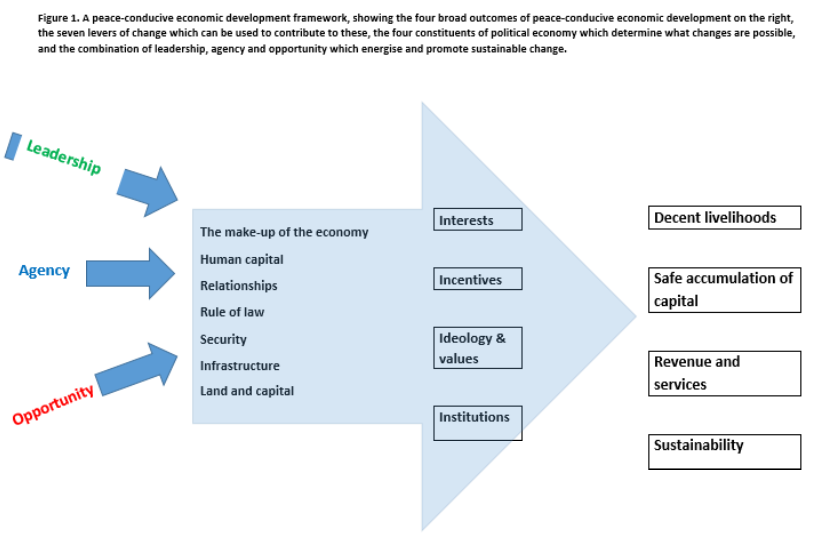
Figure 1 above illustrates the main elements of the peace-conducive economic development framework which we explain here. It is organised in four categories.
2.1 Outcomes of peace-conducive economic development
‘Peace’ is intuitively obvious at a human level, but seems very vague and distant to those defining policy, project or business outcomes. So one of the challenges is to identify simple, practical and recognisable indicators of progress towards peace which are relevant for economic promoters. Drawing on International Alert’s experience and this research, we isolated four broad outcomes of peace-conducive economic development for this purpose:
- Decent livelihoods. People are gainfully employed in decent work (self-employed or employed by others). They earn enough to live with dignity, and are treated with equality and dignity while working. They are not treated in an inhuman or degrading way; and nobody ‘owns’ another person or can force them to work under threat of punishment. Decent livelihood opportunities need to be both available and fairly accessible, to minimise exclusion and maximise mobility. This requires per capita economic growth.
- Capital. People are able to own and accumulate economic assets securely, to provide them with a cushion in time of need, to improve their income, and to invest in and improve the economy; and to do so in a way which is fair to others. As with livelihoods, access to capital accumulation opportunities needs to be fair. Capital may be individually or jointly owned and managed, including by the community or the state as in the case of welfare safety nets.
- Revenue and services. The state, or other authorised institutions, collect sufficient revenue, and invest it to provide the infrastructure and services needed for the economy and peace to flourish, and to do so fairly and strategically, with both economic growth and strengthening peace as explicit policy intentions.
- Environmental and social sustainability. Economic development enhances or at least avoids damaging the environment, and enhances or at least avoids undermining peace-positive attributes in society.
To integrate peacebuilding, businesses, governments and others should thus explicitly map how they will contribute to these outcomes through their policies, projects, business plans and approaches.
2.2 The political economy
Political economy is an analytical lens through which to understand the intersection of political and economic power, where power over different opportunities is held and resources allocated, and by whom. All economic policies and projects must be devised and implemented within the realities of the political economy, so as to capitalise on opportunities and avoid being obstructed by vested interests. Otherwise they will fail.
Most political economy analysis frameworks seem to converge on four fundamental, inter-linked parameters – ‘the four Is’:
- Interests: of individuals and groups, in relation to changes versus the status quo
- Incentives for stasis or change, as they apply to different specific interests
- Ideology and values, underpinning people’s perception of what is in their interests, and which may modify the most obvious rational economic preferences
- Institutions, inasmuch they provide opportunities for particular courses of action, especially in terms mediating between the different interests of different actors. Institutions are as often informal – for example culturally determined approaches to decision-making, deference to older people, civic duty, informal taxation paid to gangs – as formal.
Interests and incentives define how those with or without power will respond to a given situation or opportunity, either seeking change or to maintain the status quo. People’s interpretation of their interests is coloured or modified by their values or ideology. And institutions are the norms and mechanisms through which people’s and organisations’ actions and transactions are mediated in line with their interests and the incentives operating on them, and which tend to reflect and reinforce the prevailing values – or at least the values of those with power. In short, the political economy determines where opportunities for change do or don’t exist.
2.3 Seven levers of change
We identified seven domains of intervention in which economic development promoters can plan their contribution to peace. For economic development actors wanting to contribute to peace, these are the ‘levers of change’.
The make-up of the economy – the kinds of economic activity which prevail, and how people contribute to and benefit from them.
Variables include imports and exports; openness; the strength of consumer demand; diversity; the relative proportions of primary, secondary and services sectors; peasant versus commercial farming; and vulnerability to supply chain or market risks. Over the long term peace is correlated with diversity, a high jobs:investment ratio, dynamism and creativity; long, multi-stranded value chains providing opportunities for new business and for jobs, and taxation and regulation; and economic sectors which are by nature dynamic – e.g. thriving small and medium sized enterprises (SMEs) contribute to a more creative political and economic culture. An economy dominated by natural resource sectors tends to be liable to elite capture, and may reinforce clientilism, corruption and exclusion. ‘Shadow’ or illicit economic sectors and practices can have a similar effect. But it is important to contextualise these kinds of issues: e.g. open markets are better for peace, but allowing powerful elites privileged access and economic power may provide short-term stability. Likewise informal economies may be hard to tax, but may be the best way to maximise livelihood opportunities in the short and medium term.
Human capital – the capacity and capability of individuals and groups, and society as a whole to make economic and social progress through the application of spirit, knowledge and skills.
This assumes a well-educated population, and specifically in skills relevant to important economic sectors, creative problem solving, entrepreneurship and teamwork; a spirit of inclusion, and an openness to human capital improvement across gender and identity groupings; a reasonably healthy population with sufficient access to meet their basic needs and to entertain and fulfil aspirations. These attributes are critical to peaceful problem and conflict management and resolution, and thus to peace; and also, in the main, to economic development.
Relationships – functional relationships across and between societies enable communication and foster predictability and trust, which in turn underpins functional relationships.
Collaboration and resilient relationships both within and between gender and other identity groups is a critical element of peace. Relationships allow people to understand the interests and needs of others, and provide the opportunity for the development of trust, empathy and collaboration which is essential to routine, non-violent management of conflicts.
The rule of law – the availability and accessibility of formal and informal mechanisms, based on clear a priori rules, for avoiding and adjudicating disputes, and punishing those who break rules and norms.
Rule of law assumes the predictable production and execution of judgements by authorised parties; and in this predictability resides its power to prevent violence. It means the application of clear, consistent and fair rules, emphasising property rights and the rights of the individual; the absence (or rareness) of impunity. No-one is above the law. It ultimately replaces and discourages unfair and violent behaviours and is thus good for peace; while impunity encourages them and undermines peace. It also encourages investment.
Security – the degree to which individuals, families, communities and organisations are and feel safe, now and in the foreseeable future.
Security is a function of service provision by state and other providers, of individual and group capacity, and of the strength and quality of social norms, relationships and social capital. Cicero wrote that the security of the people is the highest law, and it remains one of the key components of peace. Without it, the risk of violence and harm increases, and therefore pre-emptive violence also becomes more likely; whereas security allows people to build trustful relationships. A sense of security allows and encourages people to accumulate economic assets and build human capital, thus increases their resilience to shocks. Security is also an enabler of business and economic activity more broadly.
Infrastructure – the existence of and access to an enabling physical infrastructure, especially in terms of energy, communications and transport, and essential services such as health facilities and schools.
Infrastructure should be tailored to actual needs and opportunities across society, not favouring only some groups. It should be open, accessible and maintained – and thus ideally funded through tax or other sustained income. Public infrastructure should be managed for public good. Access to information prevents distorted rumours from exacerbating conflict; access to other infrastructure allows needs to be met and enables progress on the other elements in this model. And infrastructure is of course an essential enabler of economic development.
Land and capital – the opportunity to accumulate or borrow financial capital for investment, and/or to acquire the rights to use land.
When capital is widely accessible, based on business merit rather than identity or relationships, it allows for a more diverse and resilient economy, which is by nature more resilient to violence, as there are more resource options and less narrow competition. Access to capital and/or land is important for peace in that it allows for inclusion, and for the creation of jobs and business opportunities; people in decent work and with developed capital or land (i.e. a stake) are less likely to fight.
2.4 Opportunity, leadership and agency
The economies of conflict-affected societies are by definition insufficiently conducive to peace. They are unlikely to be transformed automatically, not least because their political economies tend to be dominated by those with an interest in, and the power to maintain the status quo. Changes of the kind needed to support peace tend to be incremental, often organic, and non-linear: but they also benefit from a combination of three factors: opportunity, leadership and agency.
Moments which are propitious for change occur. These are opportunities for progress, if seized by the right leaders with sufficient capacity and agency. The risks of conflict associated with large mining or oil projects in a fragile context are well-known. On the other hand, the arrival of a large disruptive mining or other economic project, with multiple stakeholders and potential winners and losers, represents an opportunity to practise and demonstrate good governance. By engaging multiple stakeholders and respecting their interests, those leading such a project can create an experience of participation, consensus and compromise which may be relatively rare in some contexts, resulting in improved relationships among citizens, and between citizens, state and businesses, which can be built upon for other governance purposes. Likewise, new technologies, the end of a war, or reconstruction after a natural disaster represent opportunities to use or test new approaches.
Leadership for peacebuilding through economic development is provided by politicians and government, as in the case of structural changes to the rural economy underway in Rwanda, designed to promote the twin aims of economic growth and long-term stability; by businesses, as in the development of communications infrastructure and the fair allocation of jobs by investors, and the adoption of new practices by farmers; by civil society activists promoting local livelihoods and economically literate education, etc.; by international agencies operating within the country in question; or by international actions with cross-border impacts, such as the implementation of anti-money laundering measures or moves to decriminalise drugs. Despite concerns about ‘doing-no-harm’, and the complexity and limits of cause-and-effect models, the role of progressive agency remains critical, at whatever level or scope.
2.5 Tensions between economic development and peace
We saw in 2.3 that economic development and peacebuilding go hand-in-hand, in many respects. By promoting one, we can often promote the other. But this is not automatic, and there are undeniable tensions between some economic development initiatives, and the needs of peace, for example:
- Fast-tracking economic growth initiatives may undermine peace processes if they are insufficiently inclusive or conflict-sensitive
- Economic growth or transformation initiatives which make land or other resources accessible for commercial investors may create new land- or resource-based grievances
- Promoting socio-economic mobility too rapidly may undermine the perceived or actual interests of incumbents
- There may be competition between human capital and infrastructure needs for public investment funds, with infrastructure having the fastest economic return, but the latter having a greater sustainable peace return
- A trade-off between enabling rational strategic economic investment opportunities, focused in few geographical areas, and the need for more widespread investment in infrastructure to enable peace dividends across society
- In general, there is a tension between short-term stability and long-term sustainability; and between incumbency and openness
- Meanwhile some peace processes may ignore economic factors, for example the interests of potential peace spoilers, and thus fail: new democratic institutions seen as good for peace may hinder existing economic norms, and thus be subject to spoilers.
Managing these tensions is critical in ensuring that economic development contributes sustainably to peace.
4 Using the framework
The framework is designed for analysis and planning by politicians, civil servants, businesses, NGOs and international agencies – separately or together. Its utility is in working out how to integrate peace into economic development: in practical terms, to adapt economic approaches so they promote peace. The starting point for most planners will therefore be their own initial economic development niche or project. Obviously the processes for determining public policy, or planning business development projects are rarely linear. But for the sake of clarity, we outline a generic five-step planning process which consists of clarifying the mandate, defining relevant peace outcomes, analysing the political economy and the seven ‘levers of change’, developing a concrete plan, and then implementation and evaluation.
Step 1: Mandate
If most economic development promoters ignore their potential contribution to peace, a critical first step is clarify this – engaging all key stakeholders (for example politicians, constituencies, boards of directors and shareholders). For governments and many international agencies this should present no problem a priori, and businesses are increasingly aware of their responsibility to create ‘shared value’, i.e. ‘identifying and expanding the connections between societal and economic progress’. Many international agencies increasingly recognise a role in contributing to peace, as illustrated by the World Bank’s creation of a Center for Conflict, Security and Development to guide its programming.
Step 2: Relationship to the four peace and prosperity outcomes
The next step is to determine a more specific ambition in terms of our four ‘outcomes’ of peace-promoting economic development: sustainability, decent livelihoods, revenue and services, and safe capital accumulation. Most economic projects expect to have some impact on some of these, by default. But we must go beyond the ‘default’. This means examining all four characteristics to determine whether and how the agency and its project can make a difference to them as they link to peace and conflict in the specific context. This also requires identifying the tensions between peace and economic development which we noted earlier, and working out how to resolve them.
Step 3: Analysis of the political economy and the seven levers of change
The next step is to identify the extent to which the project’s contribution will be possible within the constraints of the political economy, the likely opportunities for change, the leadership and agency needed, and the mechanisms for adaptation in terms of the seven ‘levers of change’. Above all this requires a thorough and critical analysis of the context using a political economy lens, and of any proposed strategy.
Step 4: Plan
Once the project analysis has been done, pathways through which to achieve the peaceful prosperity outcomes using the levers of change are defined. This should involve a wide range of stakeholders, to ensure buy-in but also that the plans are reality-checked, and take sufficient account of diverse interests.
Step 5: Implementation, adaptation and evaluation
The project is then implemented, with continuous participatory monitoring by disinterested parties to ensure that assumptions about the political economy were sound, that the intended outcomes for peace and economic development are being achieved as planned. Plans are adapted as needed and lessons are learned and shared.
5 Examples
The full report gives an account of how this framework can be used by governments in public policy, by businesses, NGOs, international agencies and in international norms and policies. We draw on a small number of these here as illustrations, applied to the political economy and to each of the seven levers of change. Taken all together, they reinforce the idea that change is incremental, indirect and often small in scale, and requires leadership, agency and opportunity. They also show that integrating peacebuilding into economic development is practical and feasible.
Political economy
As an example of how political and economic power can interact in support of peace: the incidence of piracy in Somalia is lower in areas where clan leaders (i.e. institutions) benefit from informal taxation of imports and exports, as piracy disrupts this trade and thus their interests. Piracy grew when livestock exports to Saudi Arabia were banned; and then reduced when the ban was lifted. In another example, business leaders with access at the highest level of government in the Philippines have come together to provide politicians with advice on bringing the country’s long-running civil wars to a sustainable close, and in Kenya to help avoid election violence. Both cases combined close links to politicians with a business interest in stability.
The make-up of the economy
After the 1994 genocide, the government saw that Rwanda’s economic dependency on small farms, poor soils and limited consumer markets provided insufficient resilience to the demographic and social pressures which had contributed to instability. It has joined the East African Community to enlarge its markets, is modernising the agricultural sector, and is developing the information technology sector through specialised training and infrastructure: all this with the twin aims of improving the economy and reducing tensions. Banks in Peru require businesses to complete a kind of social impact study as part of their loans process, to ensure projects contribute to ‘shared value’ in society as well as commercial gain. NGOs, the government and international organisations all contributed to restructuring Burundi’s coffee sector, to make it less corrupt, more efficient and more open to participation, as a contribution to peace.
Human capital
Recent research described how a mining company supported the establishment of a multi-stakeholder forum to explore alternative livelihoods for land-poor communities in its area of operation, as a contribution to local stability through wider economic participation and social stability. The formal disciplines and culture of many modern businesses is often quite different from local informal, sometimes clientilist approaches, and can thus create a model of different, often more effective and fairer approaches. These values sometimes ‘leak’ out into society through the business gates. The idea of jobs creation programmes for peace was popularised by the 2011 World Development Report, but this has not yet been translated into practice on a wide scale. International agencies, businesses and host governments could consider jointly developing programmes to create jobs in very large numbers, over sufficient time – perhaps twenty-five years – in fragile contexts to provide work for young people who might otherwise become radicalised for violence, an economic boost, and peace-promoting infrastructure development, all at once.
Relationships
The study Local Business, Local Peace gives examples of employers consciously integrating staff from different ethnic or religious identities at work, in contexts of mutual mistrust outside, as a contribution to improved harmony and economic success, e.g. in the Philippines. In many countries, business networks have played proactive roles lobbying for improved relationships across conflict divisions, or better local justice and security provision. Trade can strengthen relationships. In Uganda the Lord’s Resistance Army – a rebel group associated with the Acholi tribe – attacked Lira town. The population of Lira, predominantly from the Langi tribe, boycotted Acholi businesses. Commerce as a whole stagnated, and it was Langi business leaders who initiated a process to reopen trade relations. Last year in Colombia over 120 businesses launched a #Soy Capaz (‘#I can’) peace campaign, aimed at reinforcing the peace process, using symbols of togetherness linked to their products such as “I can …wear my enemy’s shoes” and “…buy him a drink”. In Uganda, NGOs have bridged the communications gap between government, community members and oil companies, helping to reduce misunderstandings and conflicts and help ensure the oil sector contributes to prosperity and peace.
Rule of law
Businesses can help improve justice mechanisms. In Colombia the rebel group Ejército de Liberación Nacional (ELN) attacked oil pipelines in the 1980s and 1990s to extort money from oil companies. When the latter tried to deal with this through the justice system, they found it corrupted and of no help. So they collaborated with central government to resource a parallel, independent justice task force. This contributed to a drop in ELN attacks on the pipeline and the local population. The Ugandan NGO Advocates Coalition for Development and Environment has supported communities and local governments to use the courts to prevent large scale agricultural economic projects going ahead which risked undermining relations in society, as well as between citizen and state.
Security
All businesses can contribute to improved local security by ensuring their own guards, or any they hire as contractors, or government security services they collaborate with follow human rights norms in line with the international Voluntary Principles for Security and Human Rights. They can also go further, making improved local, human security a specific part of their own planning as a contribution to enhancing the living environment, and design their projects and practices accordingly. Mobile phone companies can ensure they site communications masts to maximise coverage in insecure areas. Government and NGOs are collaborating in Philippines to test new approaches to gun control in areas affected by civil war and criminal violence, aiming to improve people’s safety without undermining the informal economic activities on which many people depend.
The UN Global Commission on Drug Policy’s 2014 report proposes replacing the failed ‘war on drugs’ approach with a global drug policy regime centred on health and safety, with an end to the criminalization and incarceration of drug users together with targeted prevention, harm reduction and treatment strategies for dependent users. It recommends governments regulate drug markets and adapt their enforcement strategies to target only the most violent and disruptive criminal groups rather than punish low level players. This is politically difficult, but an effective illustration of how global policies interact with people’s security, and of how this could be transformed, with sufficient political will.
Infrastructure
In the DRC, NGOs have facilitated discussions and community decision-making to ensure that local infrastructure projects are peace-conducive. On a bigger scale the government of Myanmar has worked with NGOs over the past two years to run participatory consultation processes in designing its Special Economic Zones, so they contribute to economic progress and are socially sustainable. This way of working can lead to multiple outcomes: a better project, more likely to succeed, and a sense of ‘democratic’ participation in a country with little history of that. The Asian Development Bank in Nepal and the World Bank in Sri Lanka and Kyrgyzstan have integrated positive peace analysis and peace objectives into infrastructure projects, typically using them as opportunities to improve local participation in decision-making and governance, as important factors in sustainable peace.
Land and capital
NGOs in the Philippines have supported indigenous communities, settler communities, the government and mining companies to map and plan fairer and clearer access to land in areas where it has been a source of conflict around economic development.
6 Conclusions
The objective of this research was not to evaluate existing initiatives. Given the long-term and non-linear nature of peacebuilding, and the relative newness of economic peacebuilding as a field, it would have been beyond our resources to find and assess examples of successful peacebuilding-through-economic-development approaches which have stood the test of time. But one inescapable finding is that peace is far from being integrated routinely into economic development policies, programmes and projects. The concept of conflict-sensitivity is becoming well-known and taken into account as a mitigation approach. But conflict-sensitivity is usually about mitigating harm. The idea of using economic development as a positive peacebuilding tool remains underused, beyond the simplistic and often wrong-headed notion that ‘economic development is good for peace’.
Those integrating peace into economic development need to understand and deal with tensions and paradoxes. This means navigating a careful course between meeting the needs of incumbents in the political economy, and opening up opportunities to others. It means getting the balance right between short-term and longer term benefits, and between the needs of growth and participation. At times it means balancing starkly different peace and economic development needs, as well as short-term and long-term stability needs. Pathways to peace will often be harder to argue for than economic growth, so navigating these tensions requires analytical and political skill, especially as the pathways to peace relatively indirect and unpredictable.
In the absence of any other practically-oriented framework for analysing how to integrate peace into economic improvement, we have provided one. This aims to simplify and bring together a complex set of issues and integrate peace within a more familiar language of development. It identifies four generic peaceful economy outcomes, recognises the importance of political economy, and above all isolates seven ‘levers of change’ for programming. It is one framework among many which might have served the same purpose, and makes no claim to be more than an accessible starting point. We nevertheless recommend it to economic development promoters in conflict-affected countries as a way to consider how they might contribute to peace – as they have a responsibility to do.
Taking a broad look at economic development in fragile and conflict-affected contexts, we also make the following recommendations to help peace become more effectively and routinely integrated into economic development in fragile contexts:
- Governments, international agencies, businesses and economic development NGOs in fragile and conflict-affected countries should to integrate contributing to peace into their formal mandates, their economic policies, programmes and projects.
- This means identifying and seizing opportunities to pull the ‘levers of change’. Some of these are readily available, and any economic development work being planned or done on any of the seven levers of change is potentially an opportunity for peacebuilding.
- Practitioners should engage in more public discussion, also including academics in fragile and conflict-affected countries about the links between economy and peace, to define what they look like in practice in different contexts, and tease out the opportunities, paradoxes, tensions and overlaps.
- Researchers should identify how economic interventions have had an impact on peace historically over the longer term, and tease out and share lessons for the present day.
- International and local peacebuilding experts should do more to make their expertise available to economic development promoters; and the latter should do more to engage with and learn from them in a spirit of joint enterprise and collaboration.
 Phil Vernon